

Identifying Hazel
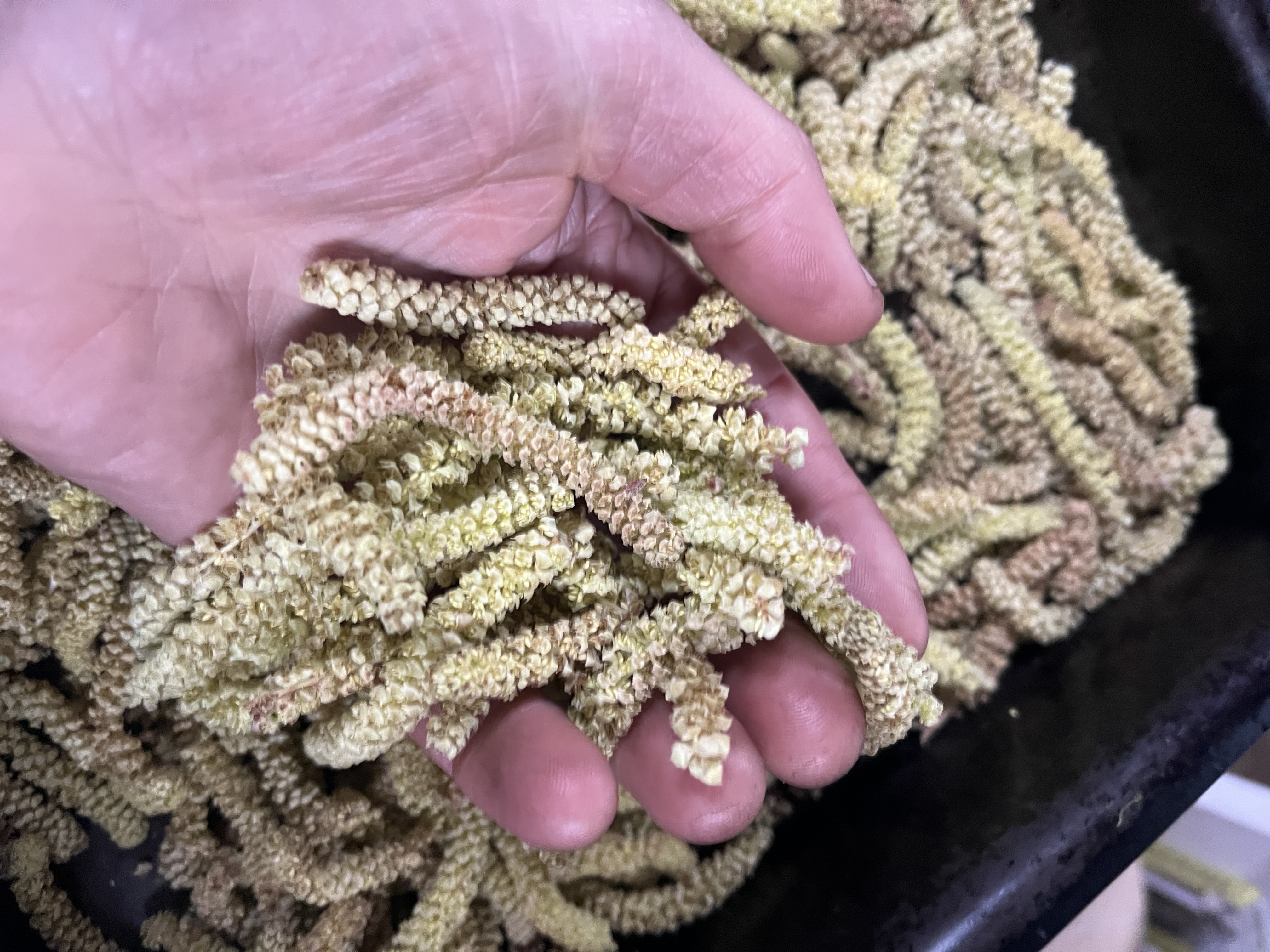
Over the last few weeks, male catkins of Common Hazel (Coryllus avellana) have been draping the bronzy twigs of our native small tree. They’re a welcome addition ot the otherwise muted colours of February.


Hazel is monoecious, which means it’s a hermaphrodite. It has both male and female flower parts on one tree. The female flowers are tiny and red-pink. It’s the male catkins we can use as food. Below is a female Common Hazel flower.
Pick the catkins when they are fully extended (they’re bunched up shorter when unripe) but while they’re still yellow. Once pale orange/umber, they’ve released all their pollen and are too old.

Hazel Biodiversity
Hazel, being a native tree that’s been around in Britain for donkey’s years, supports around 250 species of wildlife. Before we plunge our hands into these golden catkins, let’s remember how many others use Hazel as a food source:
- Hazel dormouse – nuts, caterpillars
- Nut Tree Tussock, Barred Umber and Large Emerald moths, among others -leaves
- Jay, Woodpigeon, Nuthatch, Woodpecker – nuts
- Grey & Red Squirrels – nuts
- Fritillary Butterflies in meadow locations
- Bryophytes – moss and lichens
- Nightjar, nightingale, warblers – shelter in coppices


That said, it’s a very common tree, and what I do is take no more than a small handful from each bush. We’re part of nature too, after all, and a handful of hazel catkins sure beats processed meat both ethically and sustainability-wise!
Get involved in planting native trees and coppicing hazel (which extends its life) to give back.
HAZEL TREE NUTRITION
Hazelnuts
Most of us know Hazelnuts are full of healthy fats, minerals such as Iron, Manganese, Copper, Vitamin E and at least 4 types of B vitamins. It’s a shame if you’re allergic to nuts though!
Hazel catkins
Hazel catkins contain 20% protein according to several sources. However, due to the tough plant cell walls, only a small amount of this can be broken down by the human body.
To access more of the protein, we need to add sugar or honey and heat it. This has an osmotic effect on the cell walls of the catkin, helping it release more protein for digestion.
Hazel leaves
Hazel leaves are yet again not easily digested by humans (as we don’t have cow stomachs!). However, with a little processing (cooking in vinegar, for example) or lacto-fermenting, we can make their goodness more available. The fibre they contain is always welcome.
I made Hazel Leaf Sushi with Wild Kimchi for a private forage with the ladies of the Henford Trefoil Guild last Spring.
Hazel leaves contain useful polyphenols, antioxidants, vitamins and amino acids. Pick them in Spring when they are tender, and wash off the aphids! Aphid ‘honeydew’ is the sticky secretion left on the leaves. It contains sucralose, erlose, fructose and glucose sugars as well as vitamins and probiotics. Bees use it to make Wood Honey, rich in goodness from hazel leaves and other trees.
Just try and forget honeydew is basically aphid poop…I’ll vouch that it tastes nice and sweet!


HAZEL CATKIN RECIPES
I collected 3 cups of hazel catkins for the savoury recipe and 2 cups for the sweet recipe.
Remember, adding sugar or honey and cooking the catkins increases the protein available to human digestion!
Chewy Honey Catkin Cookies
2 cups hazel catkins
2-3 tbsp runny honey
Dessert spices to taste (optional): ginger, cinnamon etc
- Roast the catkins in a dry pan for roughly 20 minutes. You want to dry them out, not burn them.
- Wait til cooled, then crumble the catkins between your fingers. They should form a pile of fine granules. Throw away the stringy bits in the middle.
- Spoon the honey into the pan and warm it. Add spices if using.
- Add in the catkin granules, stirring til it all sticks together. The sugar in the honey actually helps the pollen release its proteins.
- Form 2-4 cookie shapes and cook on a hot slate over the fire (or a baking pan). Turn them once. You can also do this with a grill.
- Remove when golden brown and allow to cool.
Serve with rosehip puree, cream, and bletted sloes. Mmmmm!

Hazel Catkin Spicy Avo Bites, Chickweed & Noodles
I couldn’t resist adding a savoury recipe. The crunched-up catkins are just like breadcrumbs, so ideal for rolling fish, wood pigeon or tofu/avocado in. the catkins are very dry on their own, so go well with something moist, yet firm enough not to soak them.
3 cups hazel catkins
1 avocado/fish/wood pigeon/packet of tofu
1/2 tsp cumin
1/2 tsp Herbes de Provence
1/4 chilli powder
2 tbsp sunflower oil (any good frying oil will do)
2 cups fresh chickweed (Stellaria media)
2 portions rice noodles
Water
1/2 a lemon
- Spread the hazel catkins out in a roasting pan. Preheat oven to Gas mark 3.
- Roast for 20 mins.
- When dry and crumbly to the touch, leave to cool for 5 minutes.
- Crumble up the catkins with your fingers. Throw away the stringy bits in the middle.
- Heat oil in a frying pan. Mix the spices, then add to oil and heat for 1 minute.
- Add the crumbled hazel catkins and mix with a spoon on low heat.
- Leave to cool. Cut up the avocado into bite sized chunks and put noodles on to boil.
- Roll the avocado in the spicy hazel catkin breadcrumb mix.
- Wash the chickweed and squeeze lemon over it.
- Put cooked noodles in bowls, add lemon Chickweed and place spicy avocado hazel catkin bites on top.

(Yes, I know. I always use the same bowl, as the other ones are plastic and have pictures of Peppa Pig on them. Yes, I need to go out and buy more bowls, but as I find this very boring, I keep avoiding it. Sue me.)
Check out my video on Hazel catkins if you haven’t already.
Happy foraging!
xx Hedgewitch Kat xx