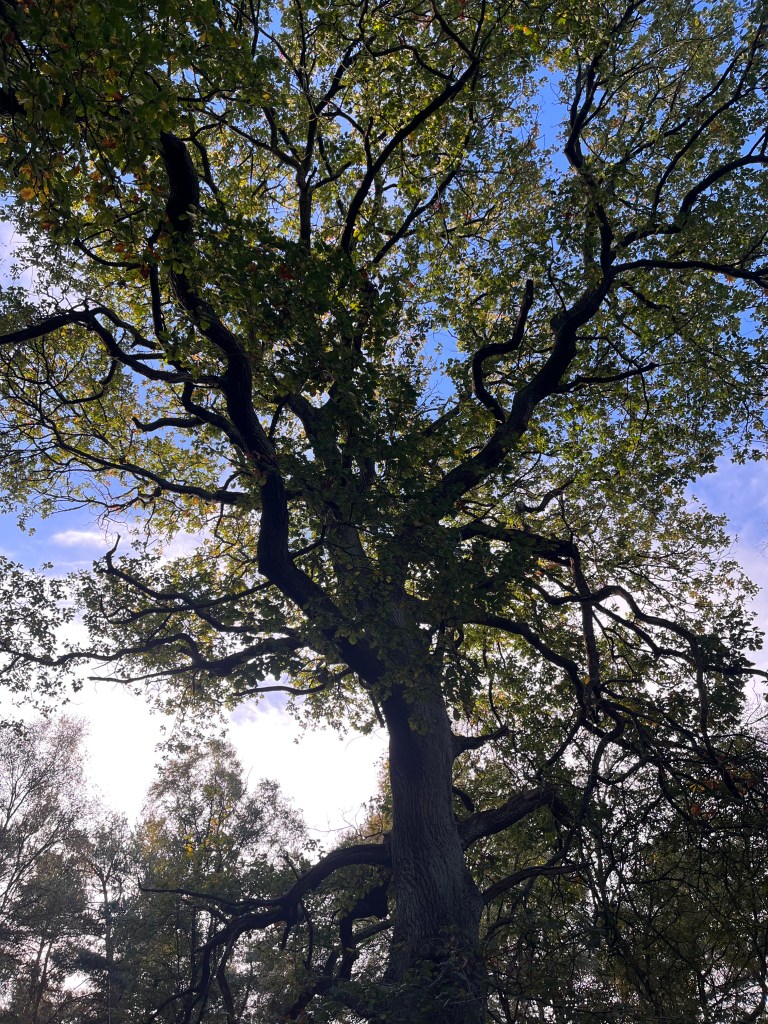
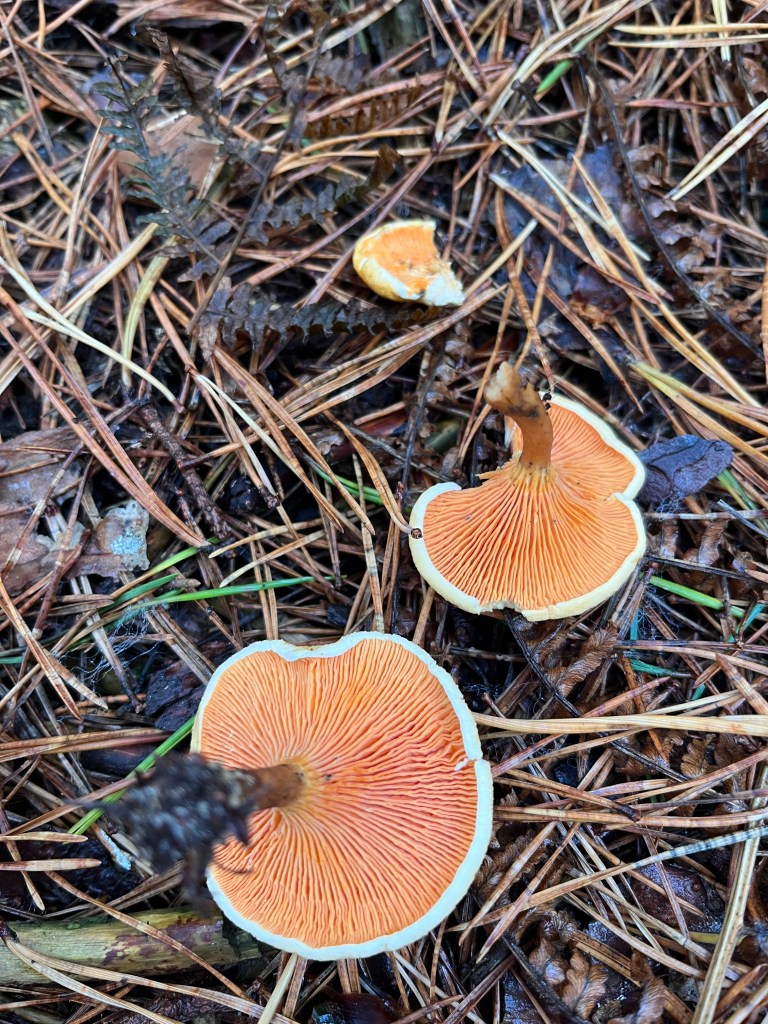
Majestic old oaks arch and swoop overhead. at their venerable feet boletes pop up like roast turkey scented bath sponges. Pacing up and down another ride leads us to bracken and silver-white birches with Milk Caps and Brown Roll Rim. Yet another way, we end up in the midst of hazel coppice. Lastly…tall pines swaying, a carpet of acid needles hiding Fly Agaric, False Chanterelle, sun-bright Stagshorn Fungus.
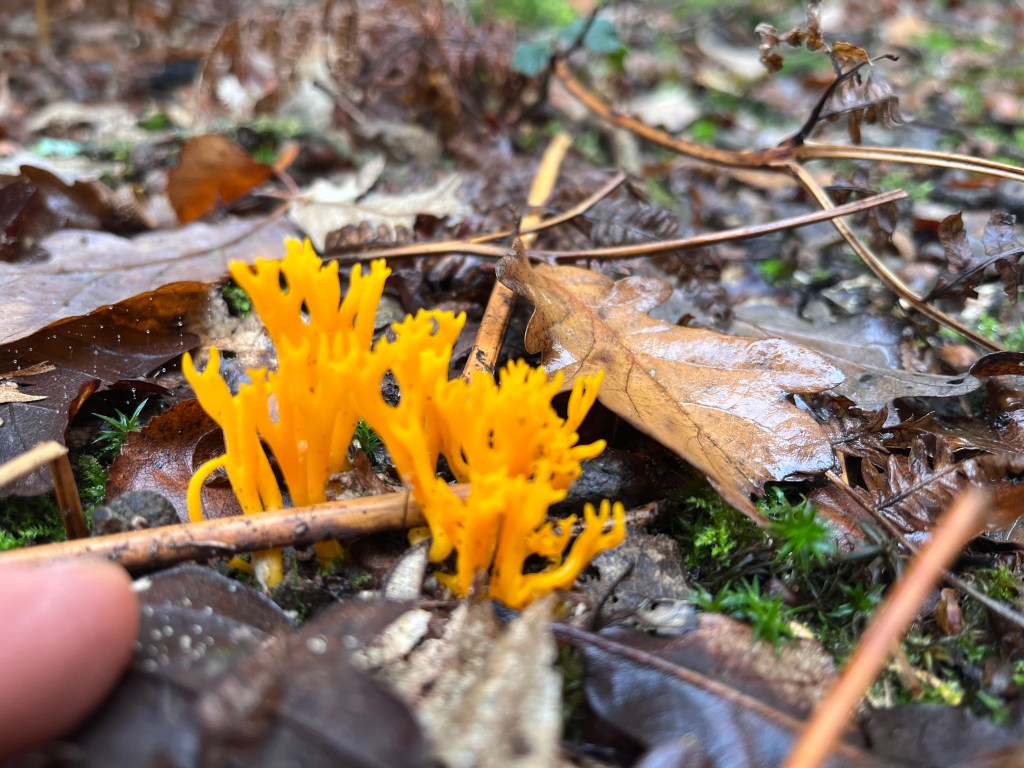
Fungi are intimately connected to trees in more than one way. Some are saprophytic, breaking down dead wood into soil. Others are parasitic. Some, like the bolete family, are mycorrhizal. They share nutrients such as minerals with the tree. In return, the tree trades them sugars from photosynthesis.
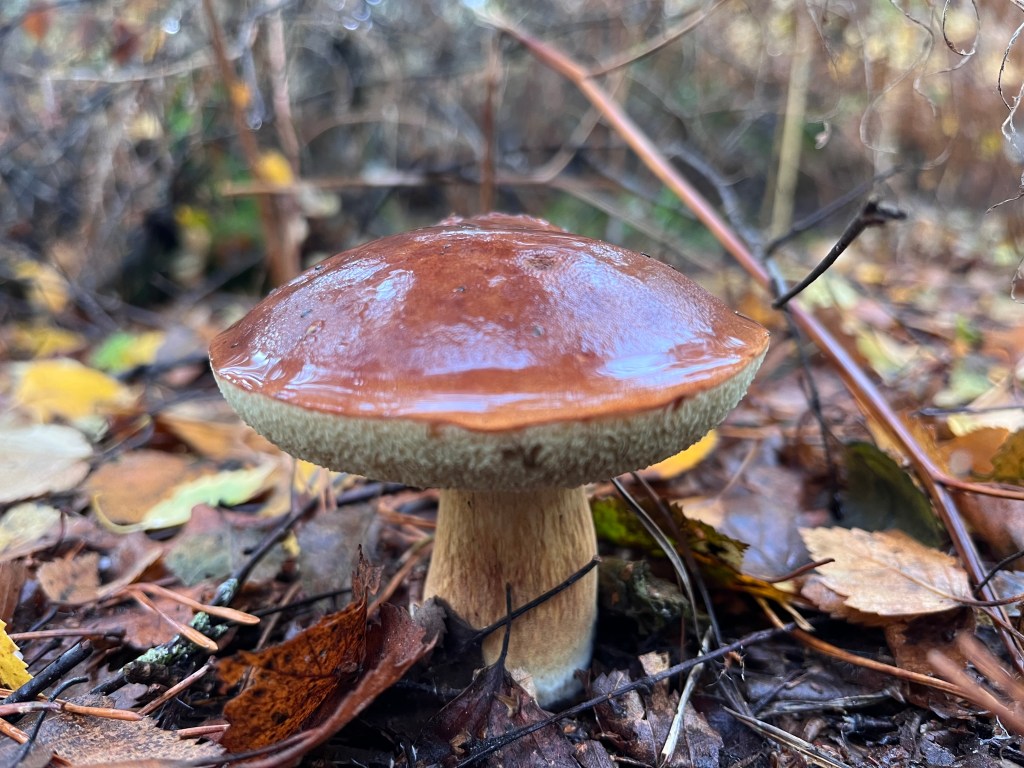
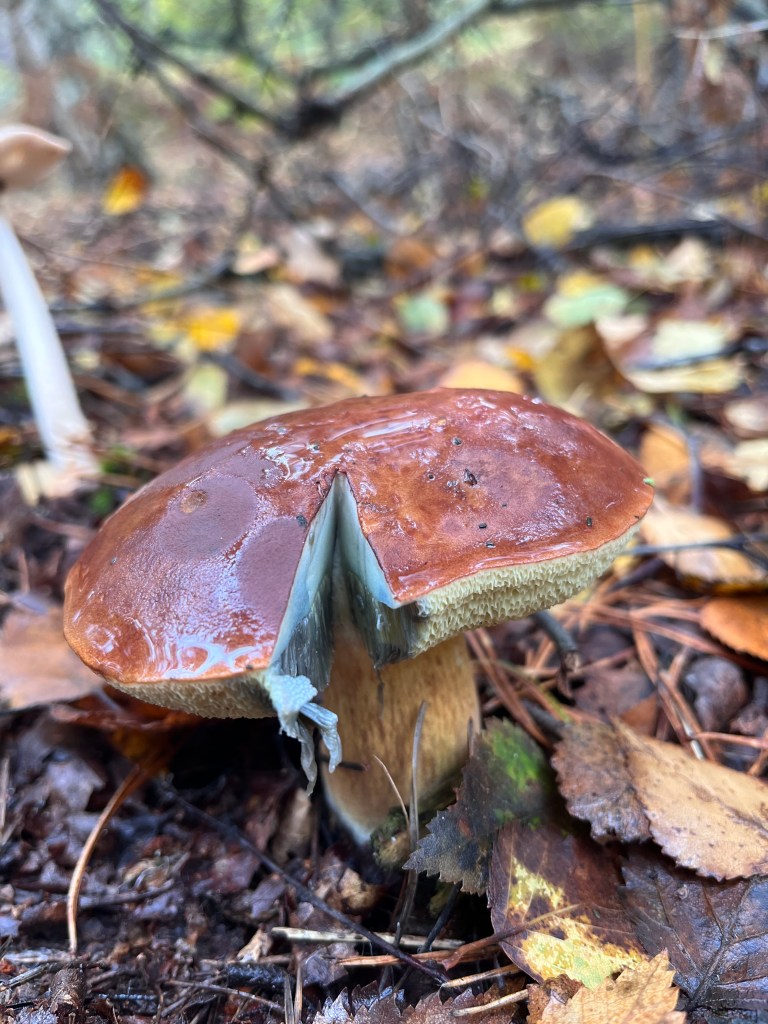
The Bay Bolete (Imleria badia) is a good edible. It’s a lovely deep chestnut colour on the cap and smells like Christmas turkey with gravy. Don’t be put off by the fact it turns blue when cut or even gently pressed. This is due to boletol, a substance which many boletes contain. It’s not harmful. Checking there are many, I only take one for my lunch later. Very nice it is too, fried on buttered toast.
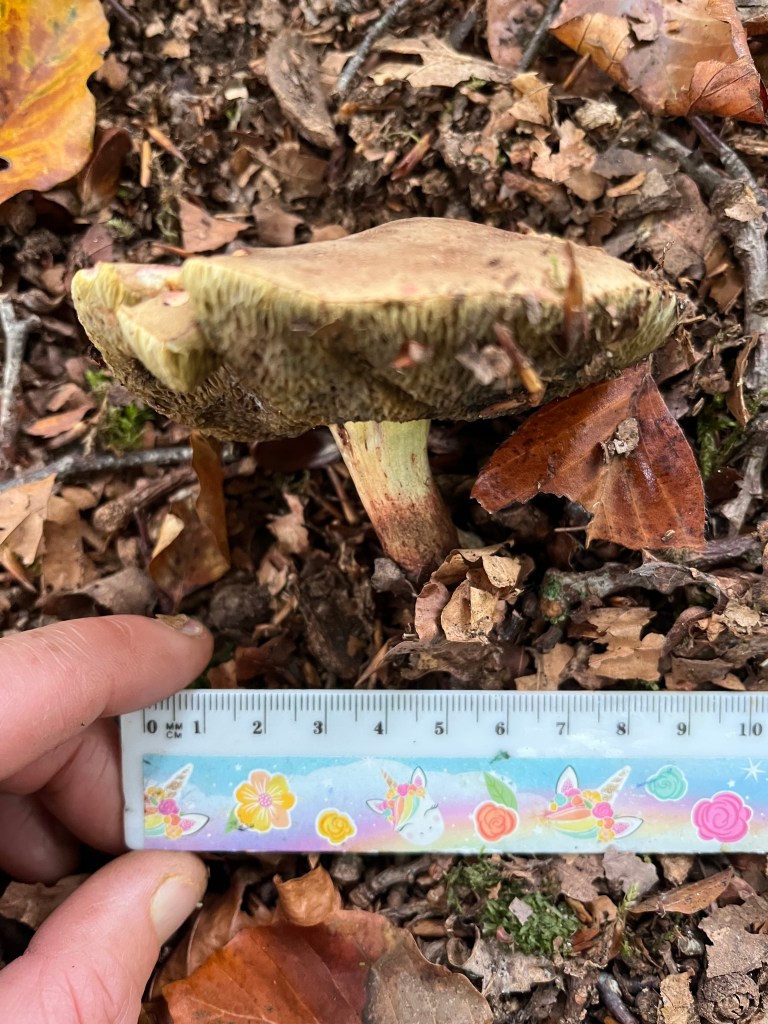
The Red Cracking Bolete, Xerocomus chrysenteron, is not so appetising. It’s very common, with a gold-buff cap and red on the stem. Once it comes of age, the cap will crack to reveal a reddish membrane underneath. In my experience it’s always full of worms, has minimal scent and mushy wet flesh. It doesn’t change colour when pressed.
Further up the bridle path, I take my students to see the Sickener (Russula emetica)that I found here on my recce a few days before. This stunning fungus has a wardrobe that could rival a Disney princess, but the cuteness belies its mouth-burning, gut-punishing poison.
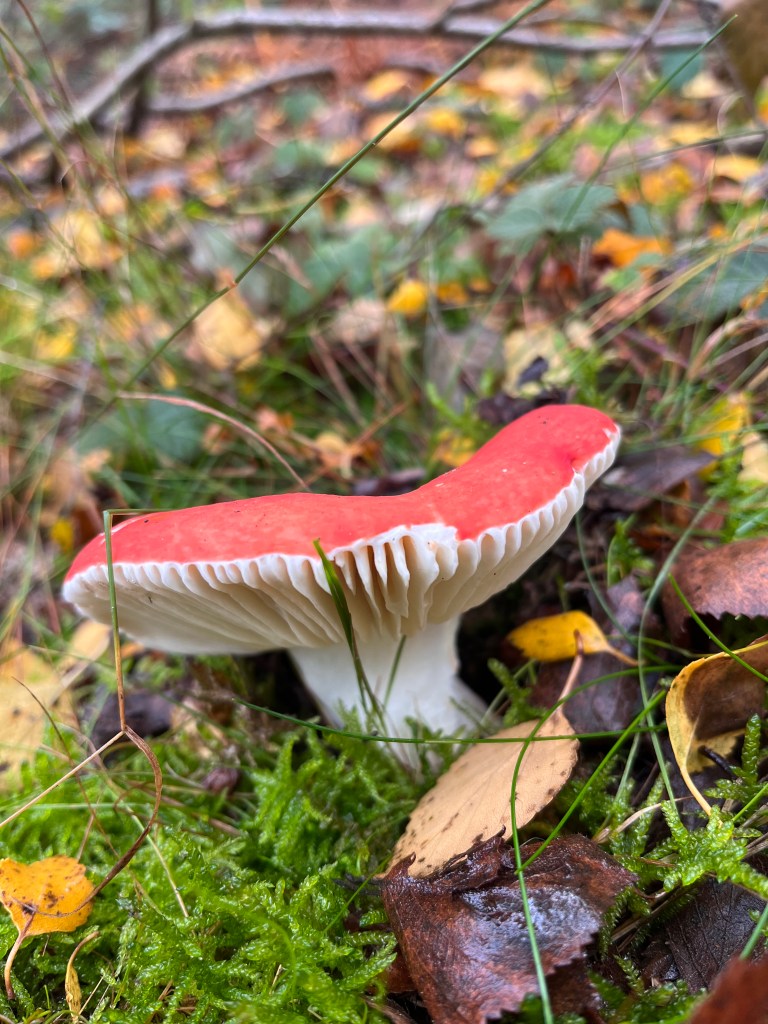
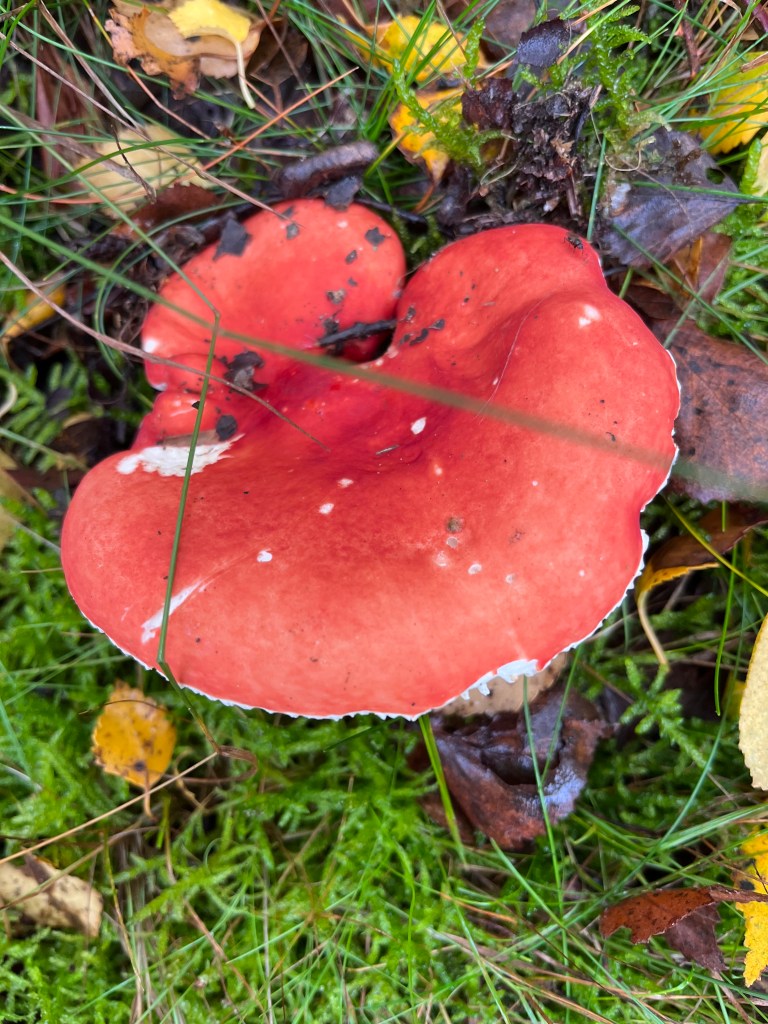
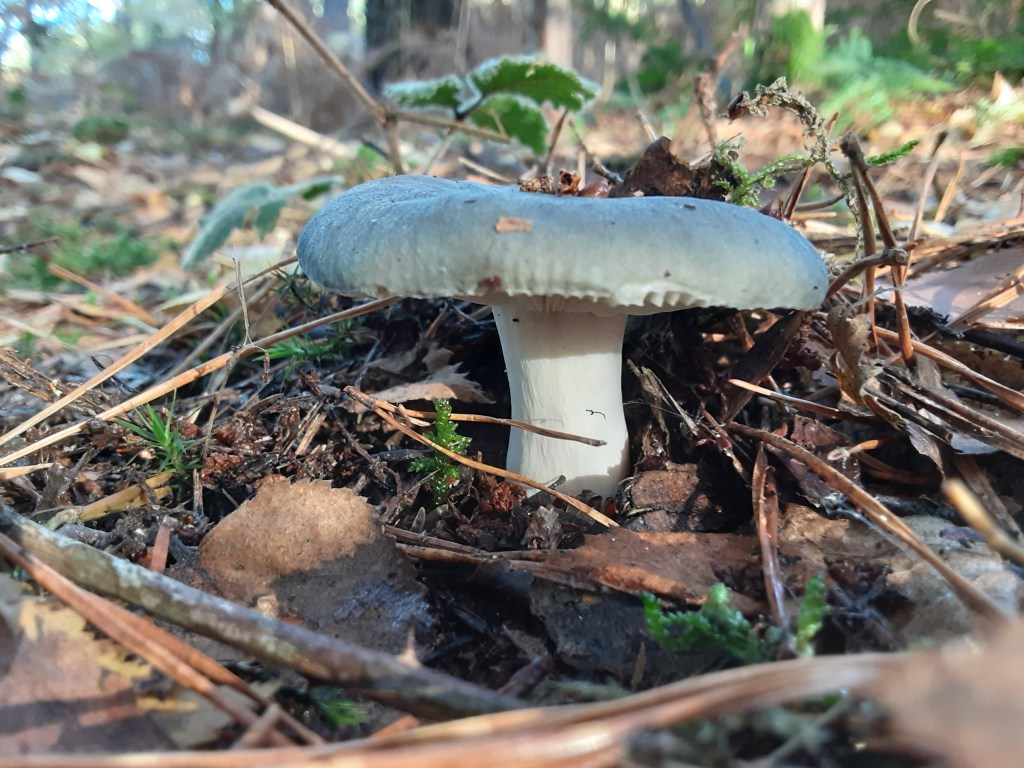
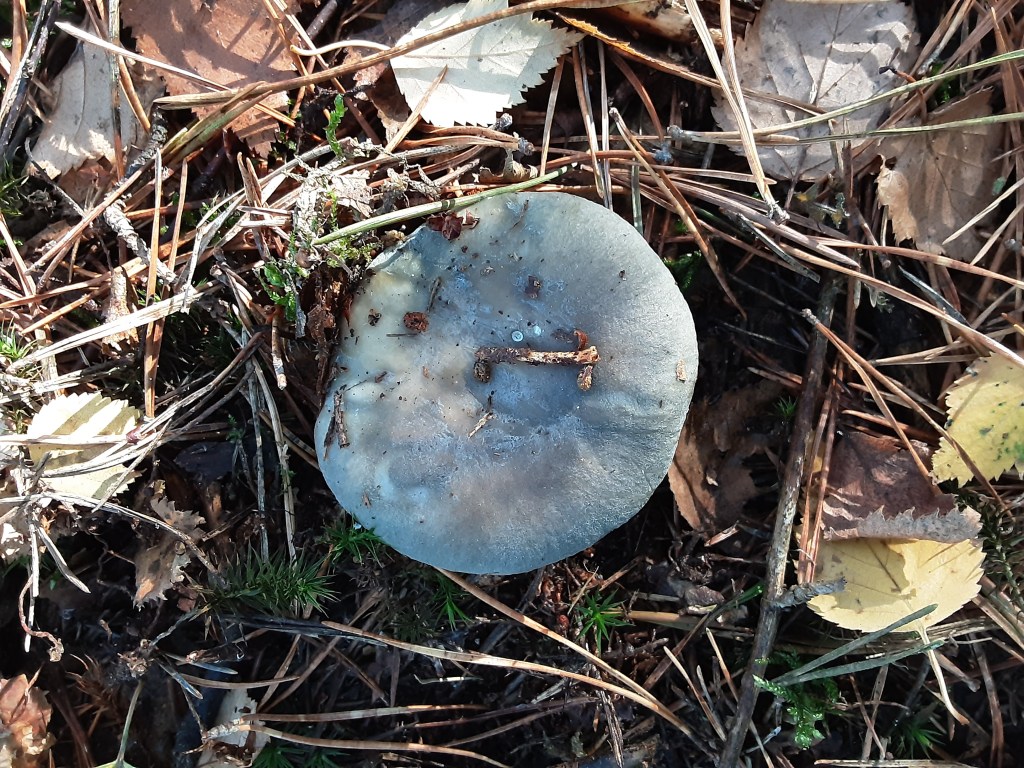
Sadly, the glorious Sickener has been destroyed, but we still have my photos. We spot several more species of Russula, including Common Yellow Russula and the excellent edible Charcoal Burner, Russula cyanoxantha. I show my students how to test for edibility using touch and, (only for this genus) a small amount of taste!
We spy a cheeky Phallus Impudicus, the Stinkhorn, in a clearing. Apart from looking very like a male appendage, this fascinating yet yucky fungus grows a honeycomb like structure. On top of this is a shiny gleba, which exudes a disgusting rotten smelling slime.
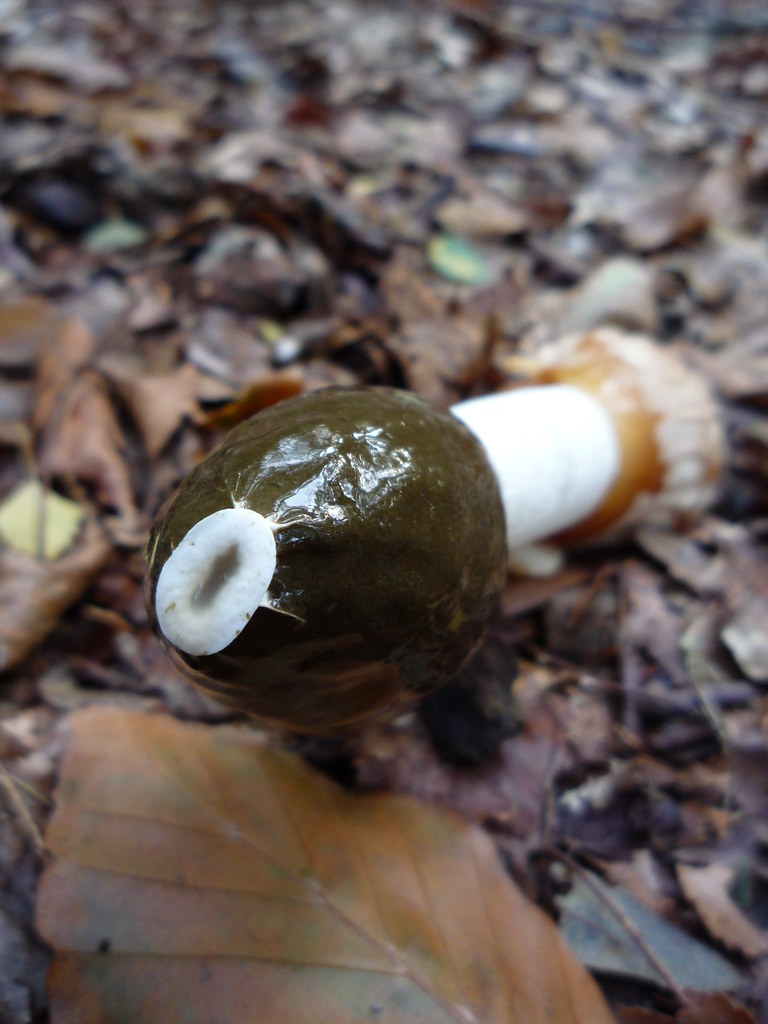
Flies love this slime. they gather in a huge crowd to eat it off the Stinkhorn, then fly off to deposit the fungi’s spore babies all over the area. Job done, the Stinkhorn sags to the ground…I’m not laughing, that would be immature. I’m NOT, I sware…
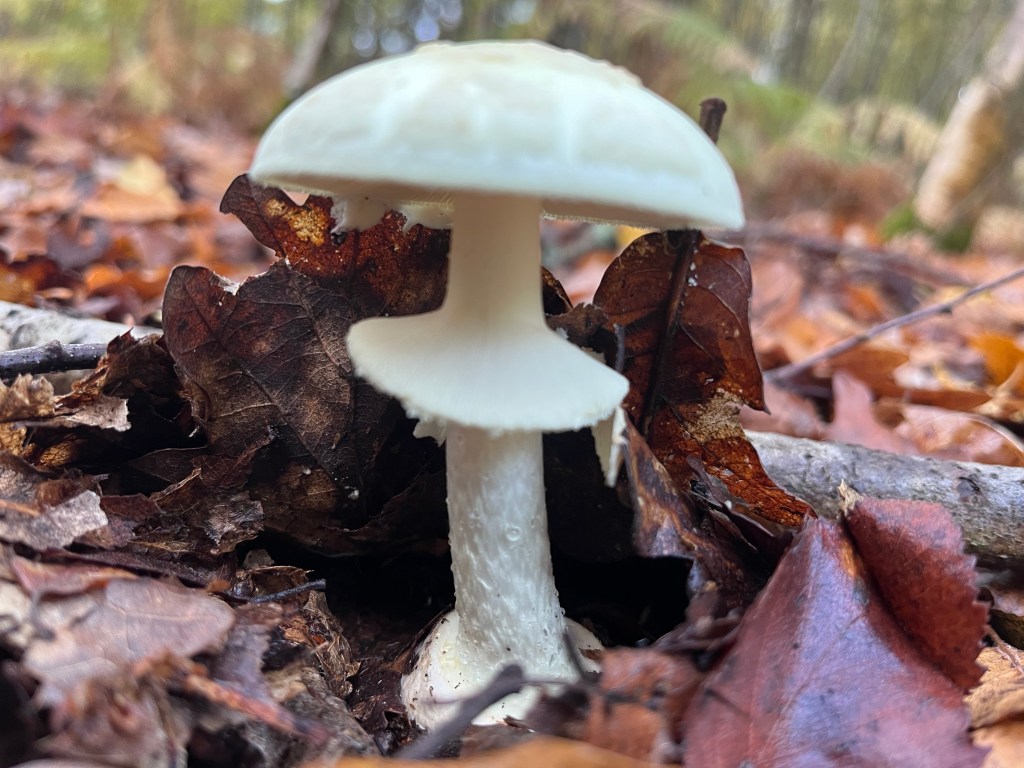
I show my students 2 edible Amanitas. I also show them how to tell them apart from the deadly Amanitas such as Death Cap, Destroying Angel and Spring Amanita.
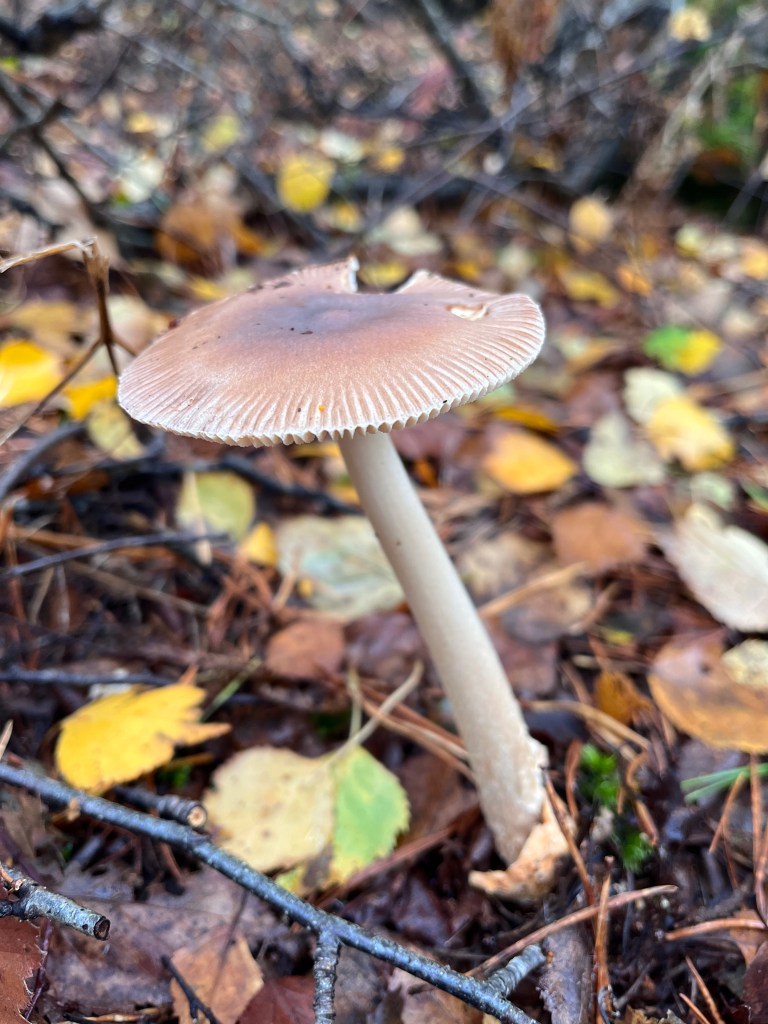
Tawny Grisette (Amanita fulva) grows from a sheath-like volva (bag), but has a smooth stem with no ring. The cap is striated and a lovely tawny orange.
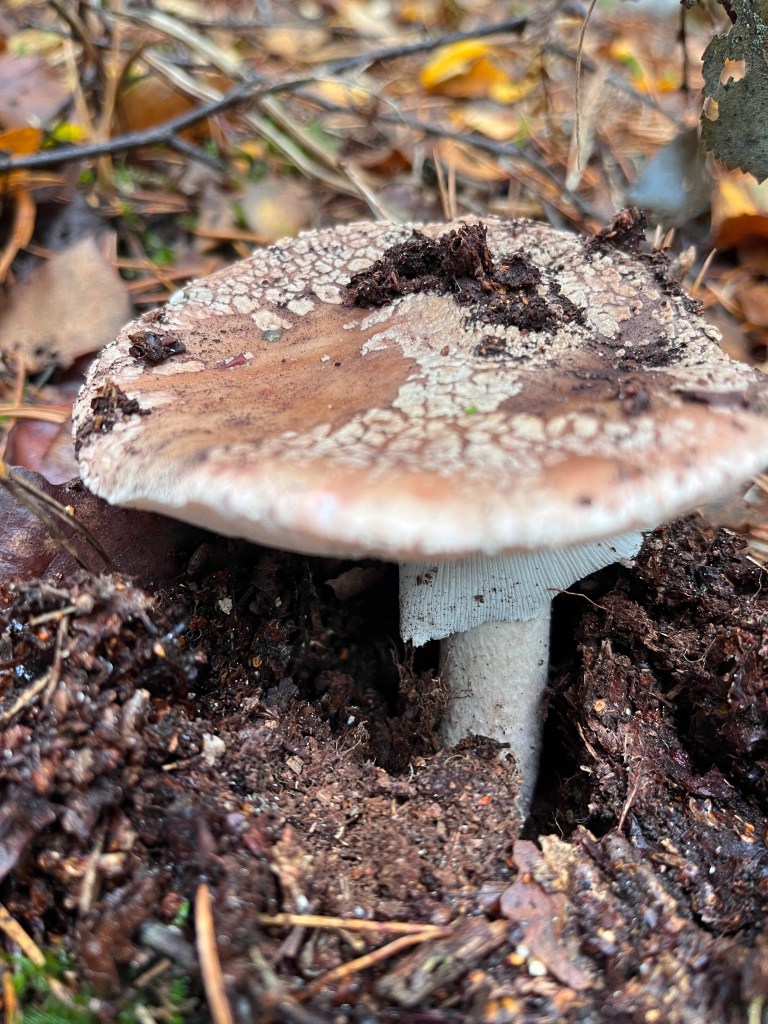
The Blusher (Amanita rubescens) has flesh that ‘blushes’ pinky-red when cut. It has delicate crumbles the same colour as the cap, which is grey-pinky cream. The skirt is striated, unlike poisonous Panther Cap and Fly Agaric which have a smooth ring on the stem.
The edible Amanitas must always be cooked. Some contain hemolysins, which if eaten raw can cause anaemia.
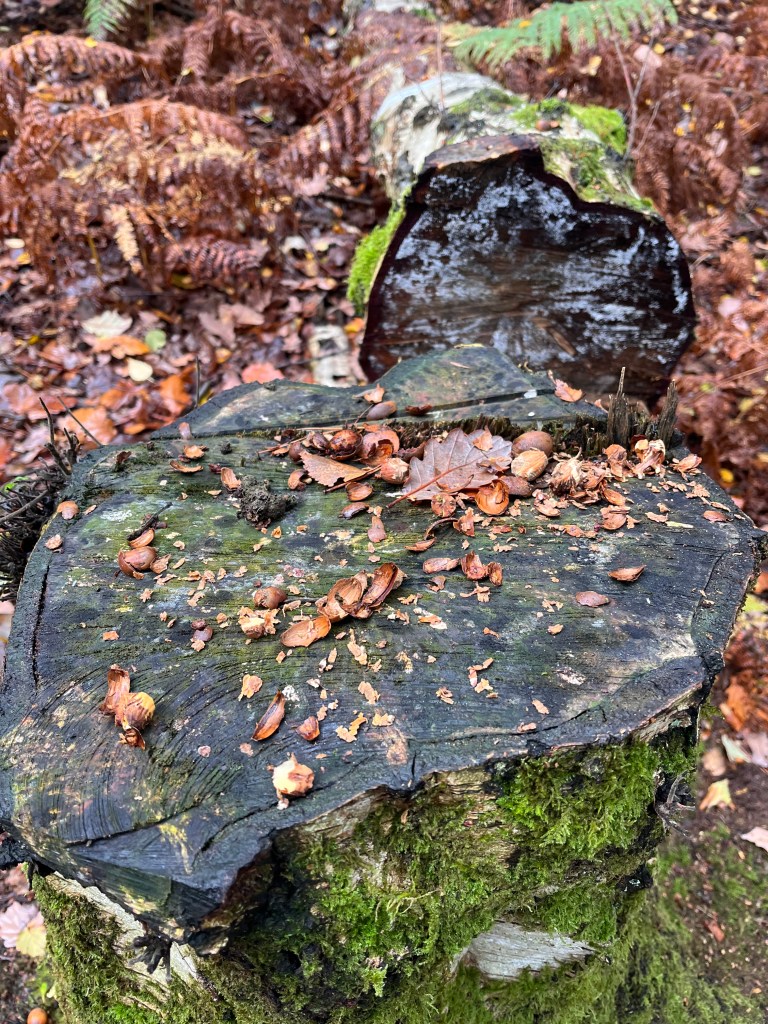
We stop to admire a Jay’s anvil. This is where the Jay, a member of the crow family of birds, smashes up acorns so he or she can eat them. We hear their sharp ‘chack’ as the Jays wait for us to leave so they can eat their lunch.
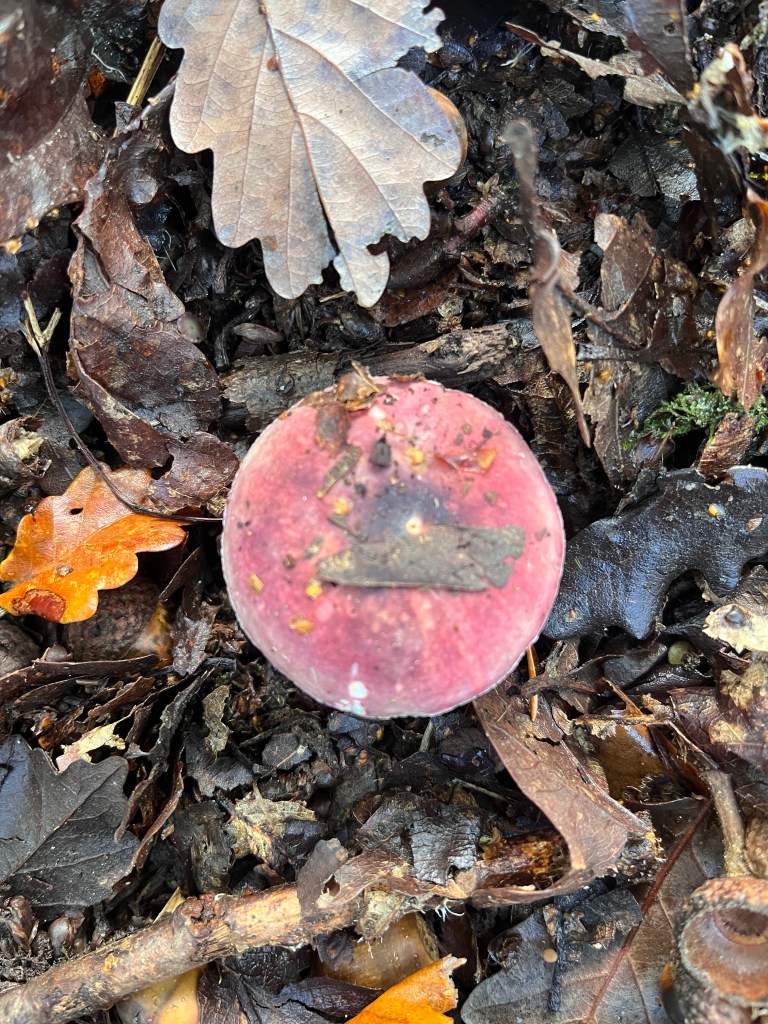
There’s so much more to tell. Fungi nations rise and fall with the rains. Who knows what we will discover next Saturday on my last Fungi course of the season. It’s family-friendly, so 2 hours long, a shorter walk and wallet-friendly to help families bring everyone. Children 5-15 are half price, follow the link. Under 5s are free. Children under 15 must have a responsible adult with them at all times.
Adult beginners can still expect to learn a lot though.
Once frost falls, many of the fungi will disappear til next year. There’s a few hardy over-winterers, but the best time is definitely now!
To book your space, click the link below.
xx Hedgewitch Kat xx
Check out “Fungi Foray (Family Friendly)@ Kings Wood” on Eventbrite!
Date: Sat, 1 Nov, 11:00
Location: King’s Wood, Heath and Reach
 HEDGEWITCH ADVENTURES Blog