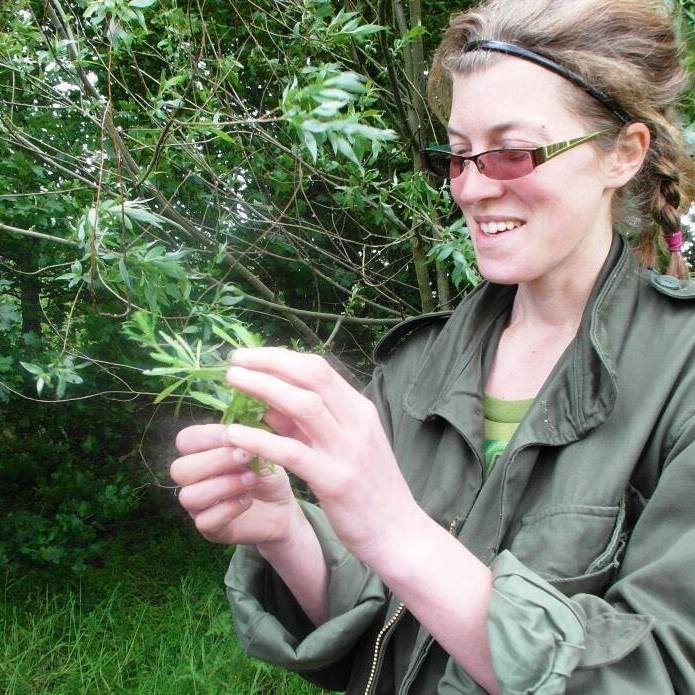
This week in April, myself and the child collected tender fertile stems of Common/Field Horsetail (Equisetum arvense). These are part of the diet in Japan, Korea and China.
They are SO WEIRD…like ALIEN THINGS.
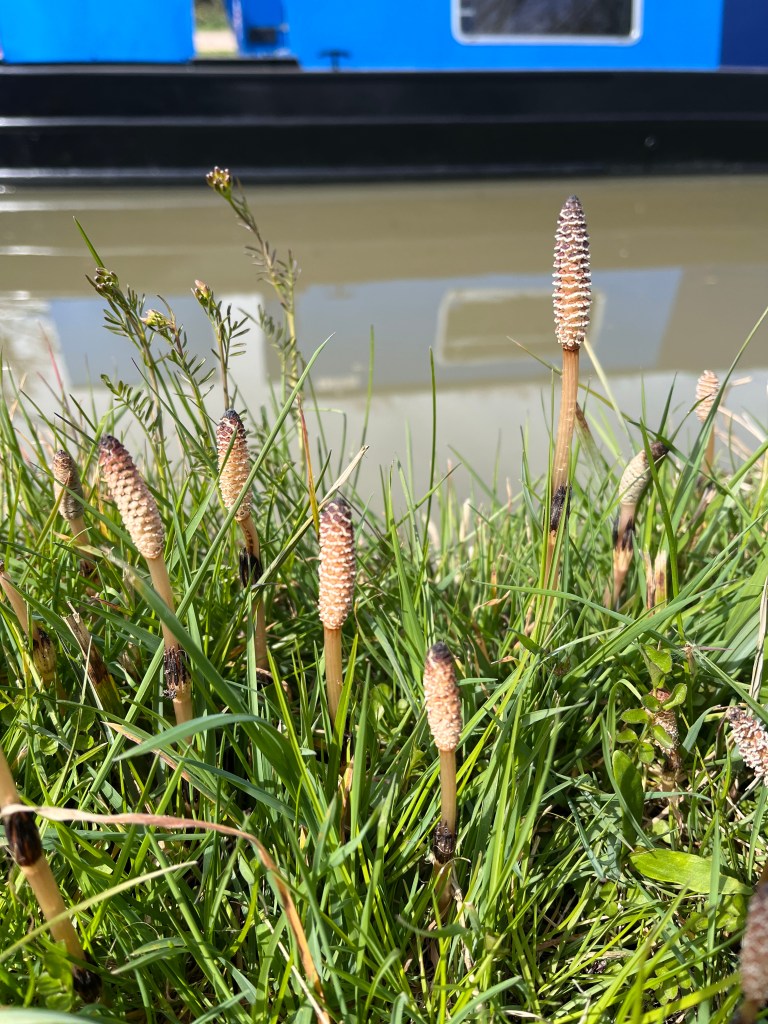
They’re a fairly common invasive species in the UK, too, grabbing a chokehold on the damp banks of watercourses.
Weird fact: the fruiting, spore carrying fertile stems appear in April and look very different from the sterile stems of summer and autumn. The only similarity are the dark bars denoting the segments of stem. That’s why Horsetail is known as ‘the Lego Plant’!
Show kids (and much older kids) how to pull apart each segment and stick them back together again. Hours (ok, minutes) of cheap fun!
The sterile stems have heir own charms: being tough as hell I have used them to scrub out pans with the aid of wood ash. Indeed I have already written a magazine article about this. They are stuffed full of silica and harken back to dinosaur times.

WHAT CAN I EAT FROM HORSETAIL?
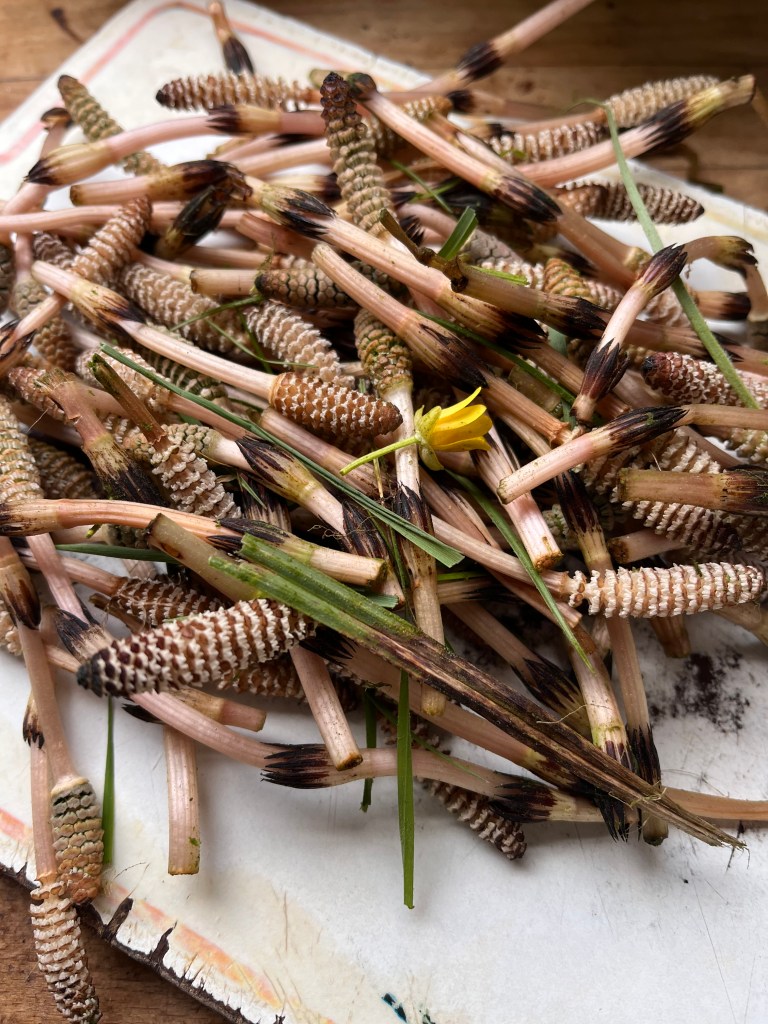
Right so here’s the money shot. The tender fertile stems are edible. They have the same texture and look as mushrooms.
The tastiest are the stems carrying all the unopened spores. You can still eat them when they’ve released their spores – they’re just a bit tougher. See below for the difference. Check out how the ‘cone’ at the top has opened in the stem at the bottom.

We gathered about a quarter of a carrier bag full, making sure to leave enough stems in each patch to propagate more Horsetails. It was fun flicking the drumstick ‘heads’, watching a yellow mist of spores exploding out.
Back at narrowboat base camp, I made up a Japanese recipe involving egg, soy sauce and sugar. Mmmm. This is known as ‘Tamago-toji’ in Japan. Another recipe omits the egg – great if you’re vegan or allergic – and is known as ‘Tsukudani’.
TAMAGO-TOJI RECIPE
2 tblsp soy sauce
quarter carrier bag fertile Horsetail stems
2 tblsp brown sugar
1 egg, beaten
2 chopped spring onions
pepper to taste

- Peel the papery black sheath off the stems. This is harmless but tough in the mouth. Or just pull the stems apart and shuck off the papery ends.
- Put in a saucepan. Add just enough boiling water to cover. Boil for 2 minutes.
- Drain.
- Add the soy sauce and sugar and cook on a low heat until sugar has dissolved.
- Pour in the beaten egg and stir in until the egg has cooked lightly. Don’t overcook the egg!
- Put on a dish and strew with chopped spring onions and a dash of pepper. Try adding to noodles or a stir fry.
THE ACID TEST: DOES MY SON LIKE IT?
Handed the tamago-toji to my 10 year old. Admittedly, the stuff does look like diahorrea with maggots swimming in it.
Amazingly, the lad was game and ate half of it. Probably as it was chock full of sugar and he likes soy sauce.
My verdict? Tender and tasty once you get over the look of it. Without the sugar and soy however it has a bitter taste. Which is no bad thing – many bitter plants are good for you.

WHAT’S GOOD/BAD IN HORSETAIL : NUTRITION
Horsetail contains large quantities of silica, so is commonly taken to strengthen hair and nails. It contains Vitamin C and a lot of fibre.
It has possible anti inflammatory and diuretic properties so is taken for water retention and to combat UTI’s such as cystitis.
I usually use the sterile summer stems in a tea for this.
Horsetail does inhibit the vitamin thyamine when taken regularly, so is best as an occasional treat. It contains thyaminase.
xx Hedgewitch Kat xx
 HEDGEWITCH ADVENTURES Blog