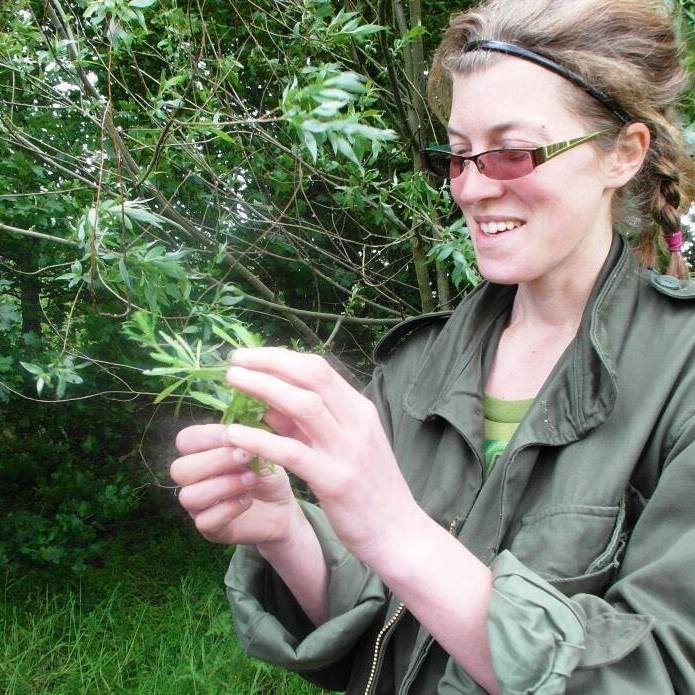
Don’t let the dark, damp, cold winter weather put you off foraging. (Well, ok, let it put you off a bit.) There still a fair amount for us bush botherers to eat if you know where to look.
Check out what I found on a 1-hour stroll around my local neighbourhood.

PINE NEEDLES
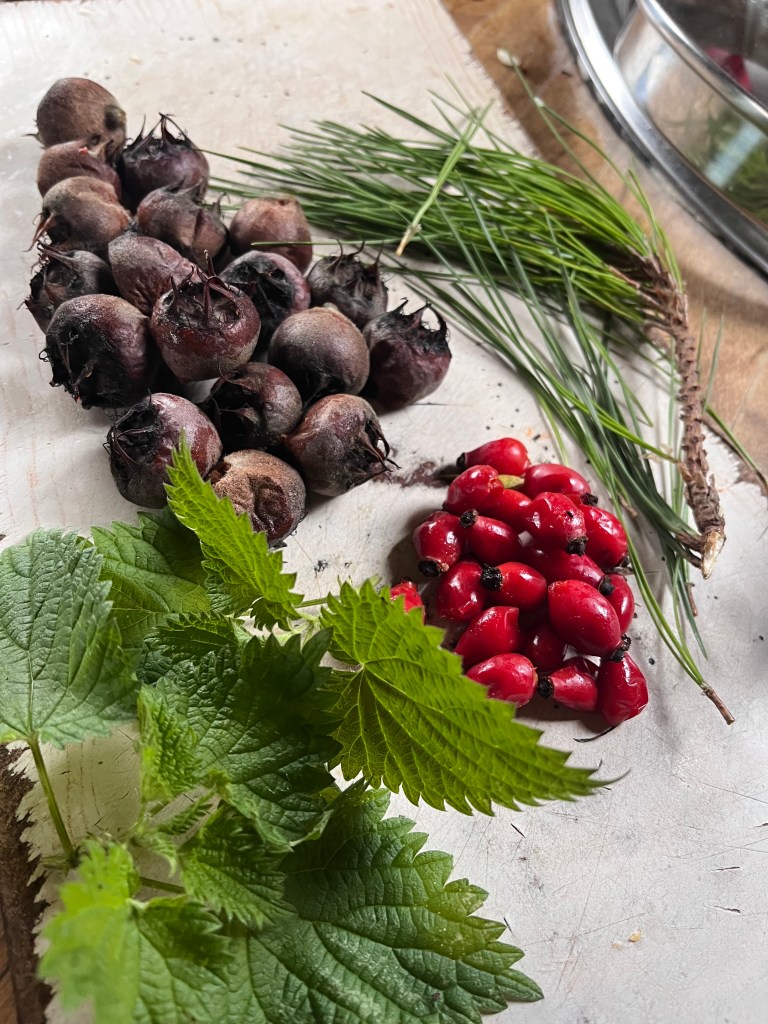
I make tea from pine needles (Pinus sps) by brewing them in hot water for 5 minutes. The tea has worked when the water goes golden colour. It’s a great source of vitamin C and has a lovely Christmassy flavour of pine.
Choose the brightest, greenest needles for your tea. Pluck them out of the papery sheath at the base. Any pine needles will do. NOT yew needles though!!!

MEDLAR
I was so excited when I found the council had planted a young medlar (Mespilus germanica) on my foraging route to the swimming pool. Medlar is an ancient fruit tree that was popular in the times of knights and KIng Henry The Eighth.
I like the spiced medlar with clotted cream & vanilla recipe -so decadent, it was a favourite with medieval nobility! It’s easy to make a fruit leather or a jam with them.
The raw fruit is often only edible after it’s been hit with a frost and started to rot!!! I ate a nice soft brown one off the tree just now. It tastes like a soft, sweet baked apple.

NETTLES
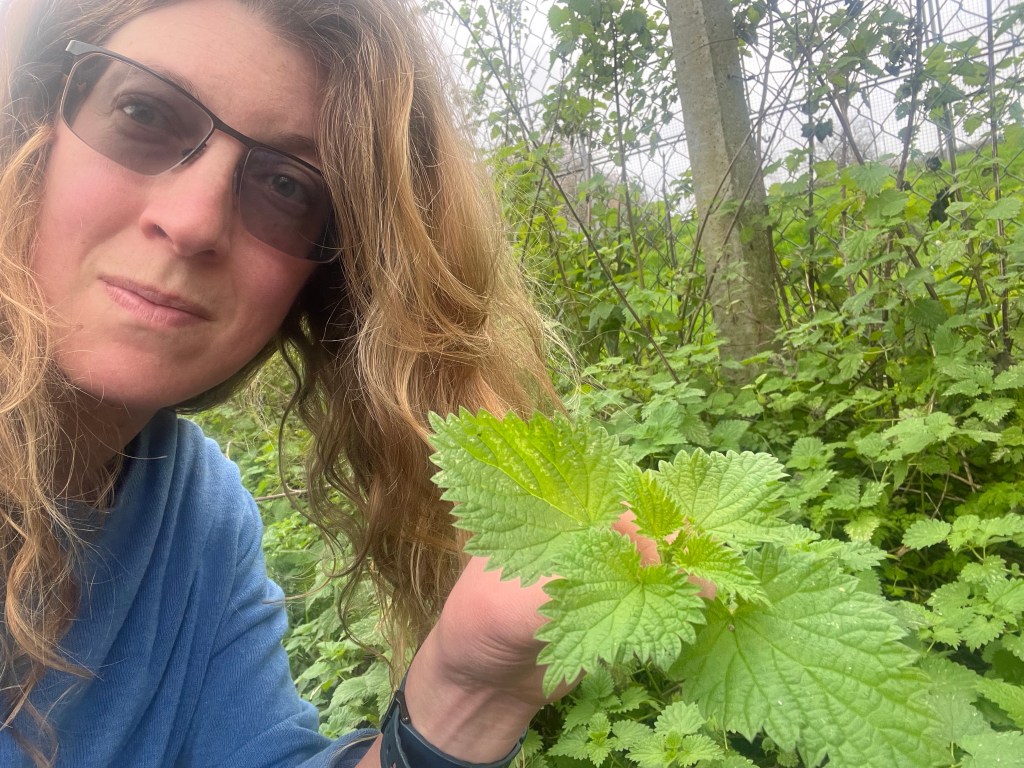
As its been so mild in Bedfordshire, UK, there’s still plenty of tender, fresh Urtica dioica/urens nettle tops. Check verges that have beeen mown a few months back for that second flush of fresh veg.
Make nettle tea, soup, stew or falafels for that important top up of both iron and Vitamin C.

BARBERRY
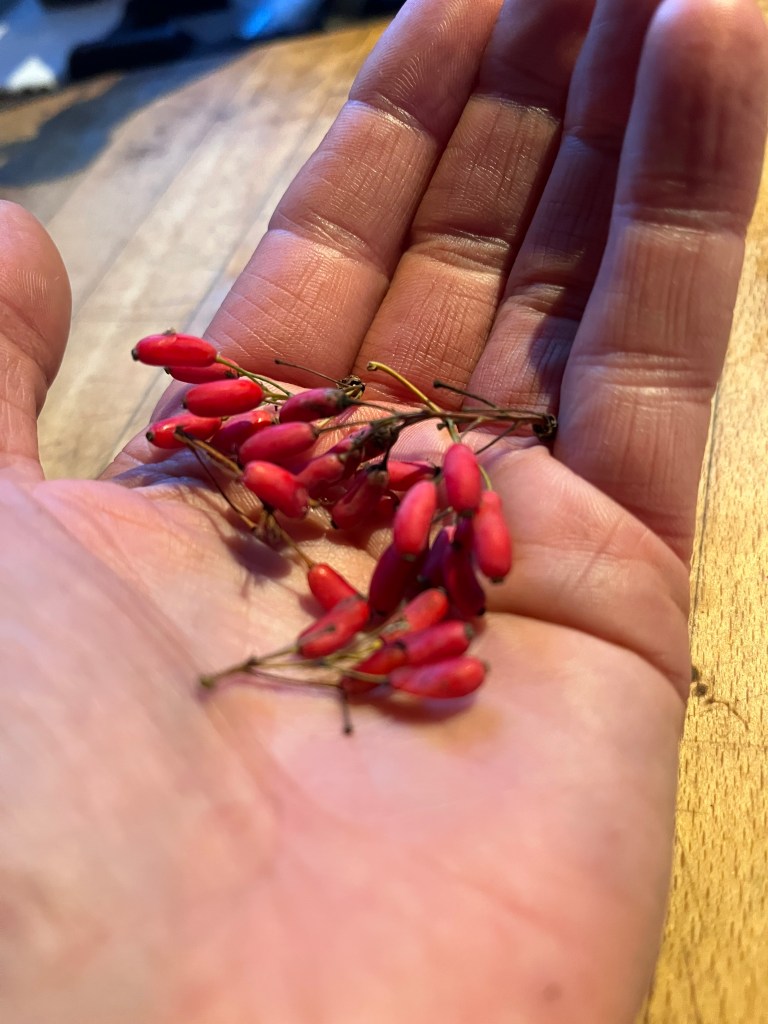
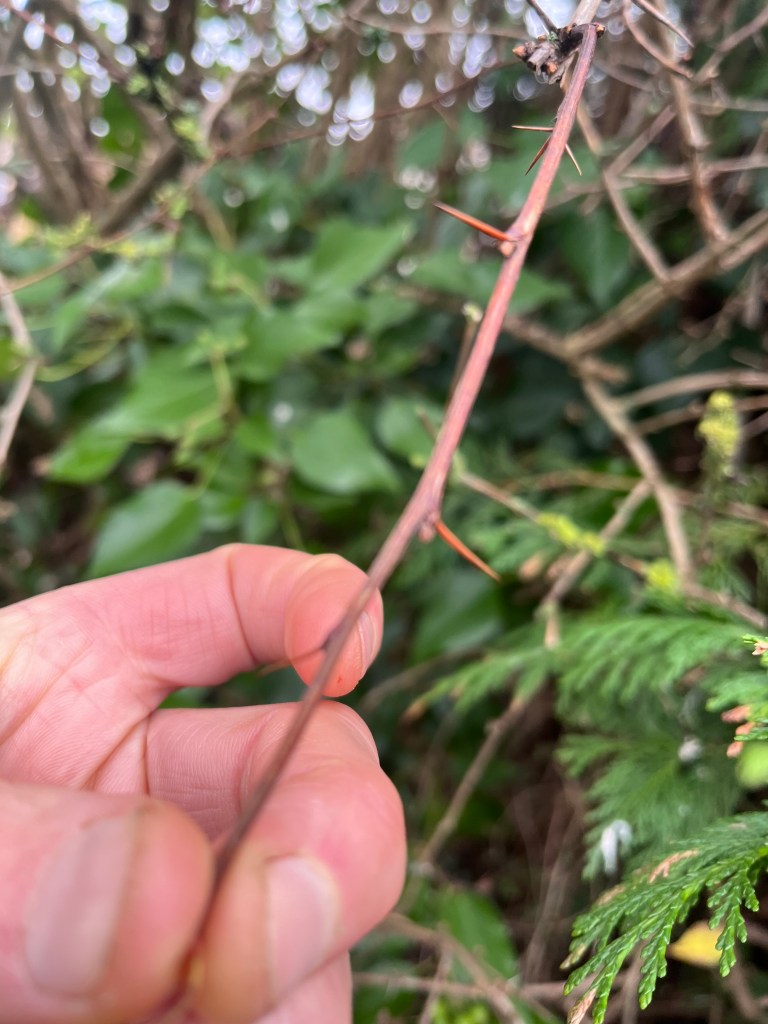
Berberis species all have edible fruits. These are red and look like tiny lozenges. I tend to find them planted in people’s hedges around their gardens, so I recommend introducing oneself to these people first and asking if it’s ok to graze on their hedge.
Most barberries are planted as a dense hedge to ward off intruders, as they are very spiny. Therefore most people don’t eat them or even know/care that they are edible, and will gladly tell you to munch away.
THe fruits are tangy, which i love. You can dry them and sprinkle them on muesli, yoghurt, or in puddings.

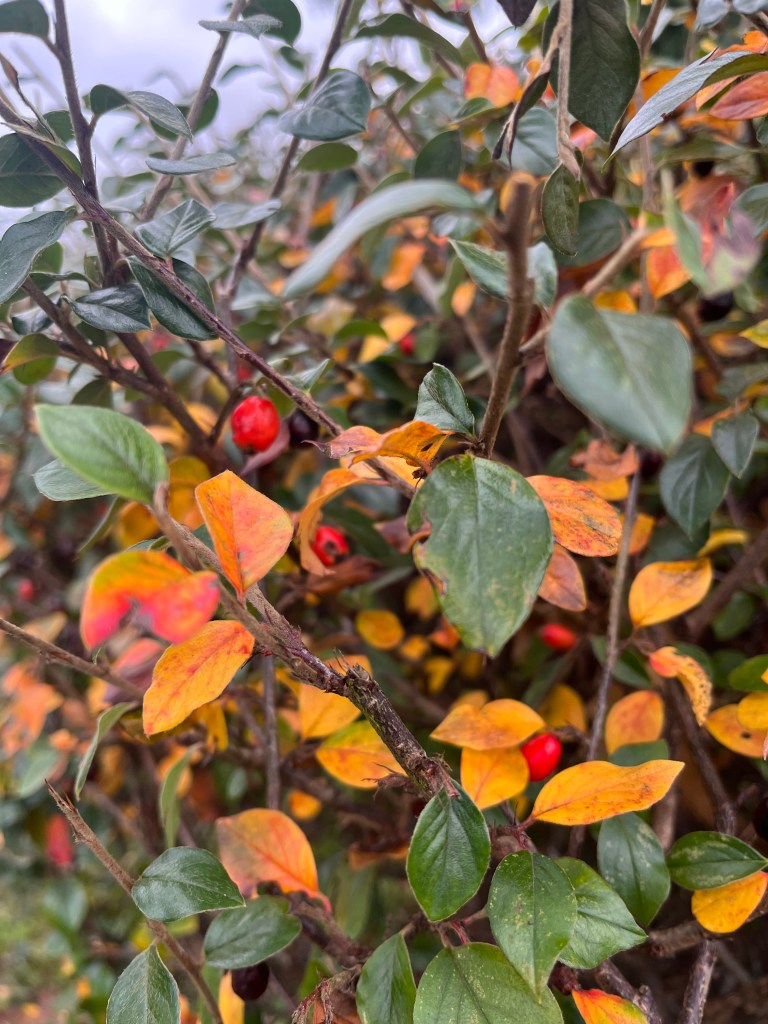
The leaves are rounded. They can be deciduous on some species (like Common Barberry, Berberis vulgaris) and evergreen on others. The twigs will always be spiny. See the difference between Berberis (Barberry) and a non-edible shrub (Pyracantha/Cotoneaster) on the right.

DOG ROSEHIPS
I’ve banged on about these at length in previous posts and articles. In a nutshell : now is the time to go rosehip picking! Choose the softest ones that have been bletted by frost – they go a dull red. Squeeze out that delicious, tangy pulp onto your finger and enjoy straight from the bush.
Or make fruit leather, wine or jam.

 HEDGEWITCH ADVENTURES Blog