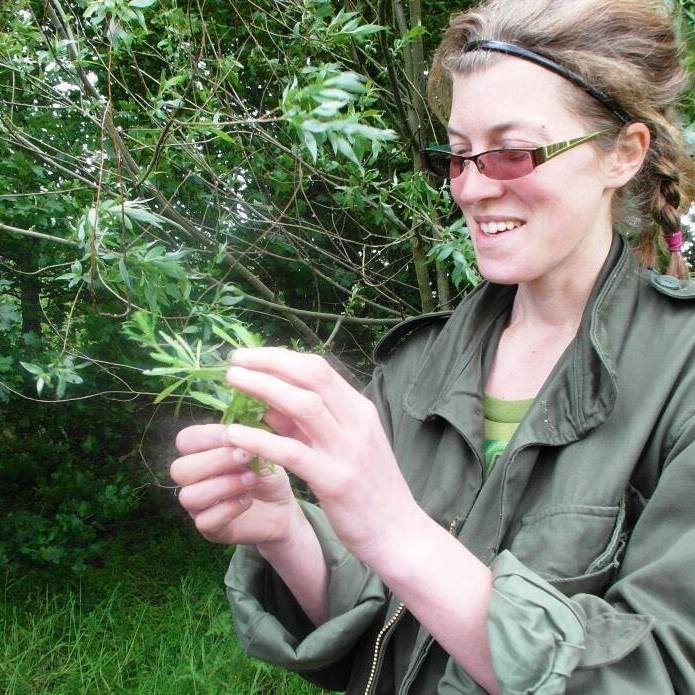
There’s all sorts of good reasons to know where you can source natural painkillers in the UK wilderness. Be that your back garden in Slough, while narrow boating through remote countryside, or hiking in the Lake District!
If our food system falls flat on its face, no only are there only 3 days worth of food in the supermarkets but medicine will quickly run out too. You may laugh now, but it doesn’t hurt to be prepared.
1.MEADOWSWEET (Filipendula ulmaria) – this creamy white honey-scented flower contains salicylic acid, the active constituent of aspirin. The leaves are deeply grooved, dark green and look like dinosaur feet at the top! Notice the red stems, too.

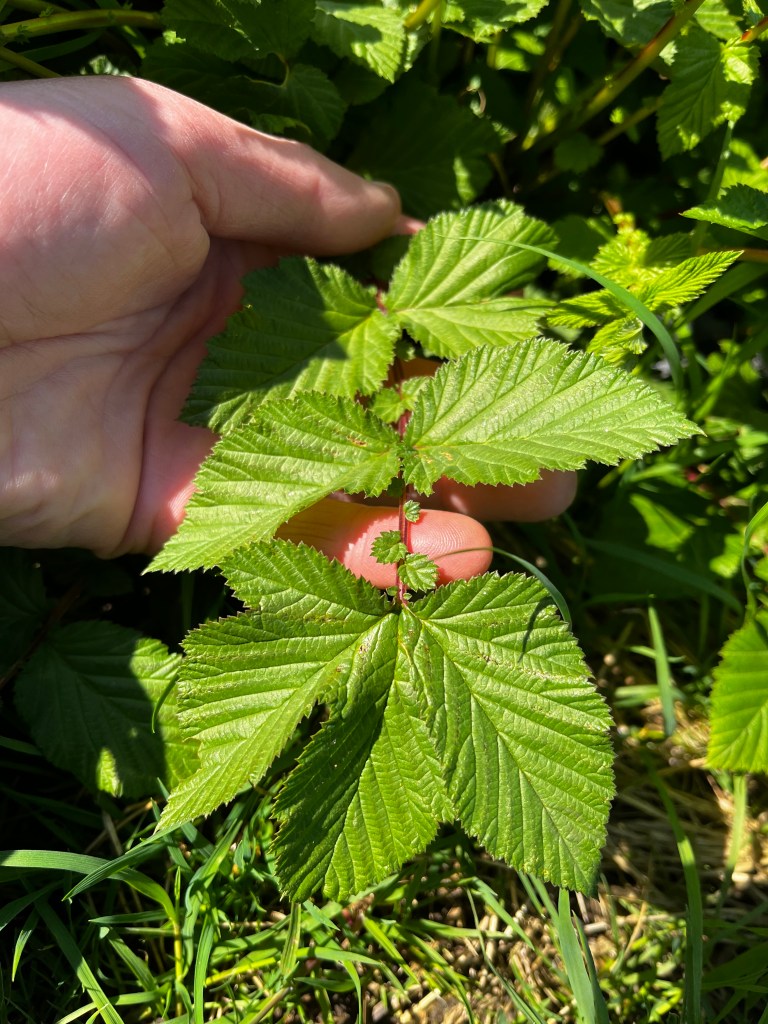
Brilliantly, it avoids many of the side effects of aspirin, as if you ingest the whole plant, its alkalizing qualities prevent the salicylic acid from harming the lining of your stomach. This is a common complaint among people who need to take aspirin regularly.
You can find it on damp verges and waysides and in water meadows. Only pick the flowers for use as a painkiller. The rest of the plant is not edible. Simply bung 1 or 2 flower heads in some boiling water for a couple of minutes. It even tastes nice!
Use for headache, stomachache, earache, and any other sort of bodily ache really. Evidence shows Meadowsweet blocks uric acid in the body, so it helps with conditions such as arthritis and gout.
CAUTION: DO NOT TAKE MEADOWSWEET IF YOU ARE ALLERGIC TO ASPIRIN.
2. WHITE WILLOW (Salix alba)
The bark of white willow also contains salicylic acid/salicin. White willow bark was traditionally used in Britain for hundreds of years as a painkiller. It helps with conditions such as lower back pain, period pain, headaches and arthritis.
If you can’t find white willow, there is still active amounts of salicin in Crack Willow and Black Willow. None of the willows are poisonous, so if there’s one near you, you might as well give it a try.
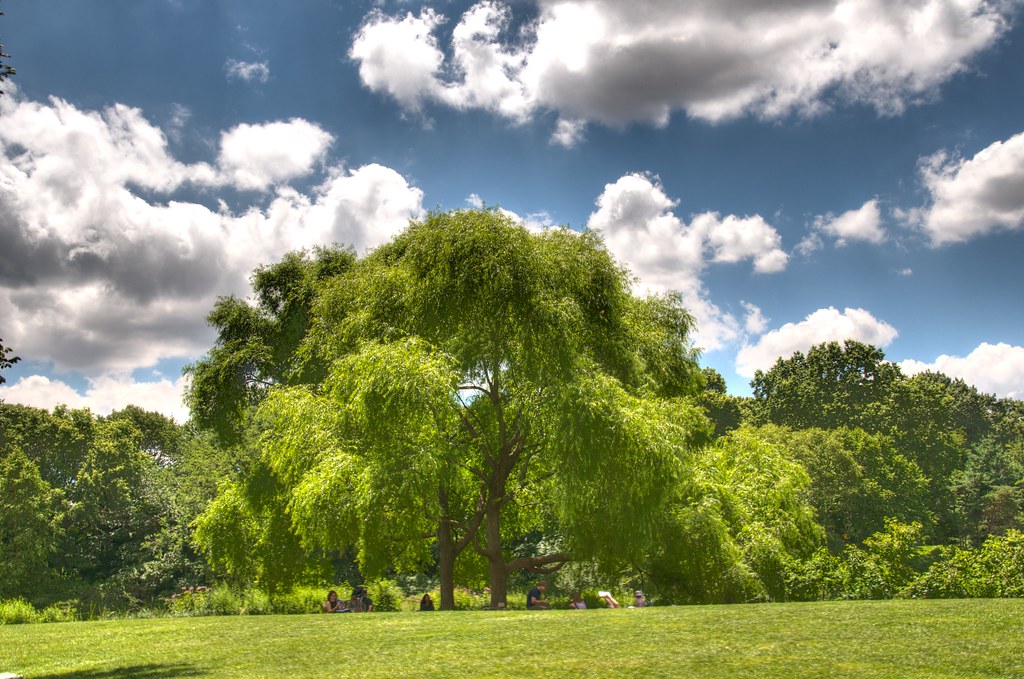

Strip thin pieces of bark from willow branches. Don’t go all the way around the living tree doing this as you may kill it. Just stick with a small area, or cut off some smaller outlying branches and use those.
Dry the bark strips. you can make a decoction (tea boiled for a long time, like 15 minutes) or a tincture (bung it in vodka or similar strength spirit and leave to infuse for several weeks).
CAUTION: DO NOT TAKE IF ALLERGIC TO ASPIRIN
3.WILD LETTUCE (Lactuca virosa)
Wild Lettuce is known as a sedative as well as a pain reliever. As we talked about previously, it helps you sleep and lowers your sex drive! It’s known as ‘The Opium Lettuce’. Lactucin, NOT opiate, is the superpower within this plant, however.
There’s a few different types of wild lettuce. I’ve tried out Lactuca serriola too. This wild lettuce has rounded dark blue-green leaves and a smooth stem with no spots. It’s less potent than Lactuca virosa.
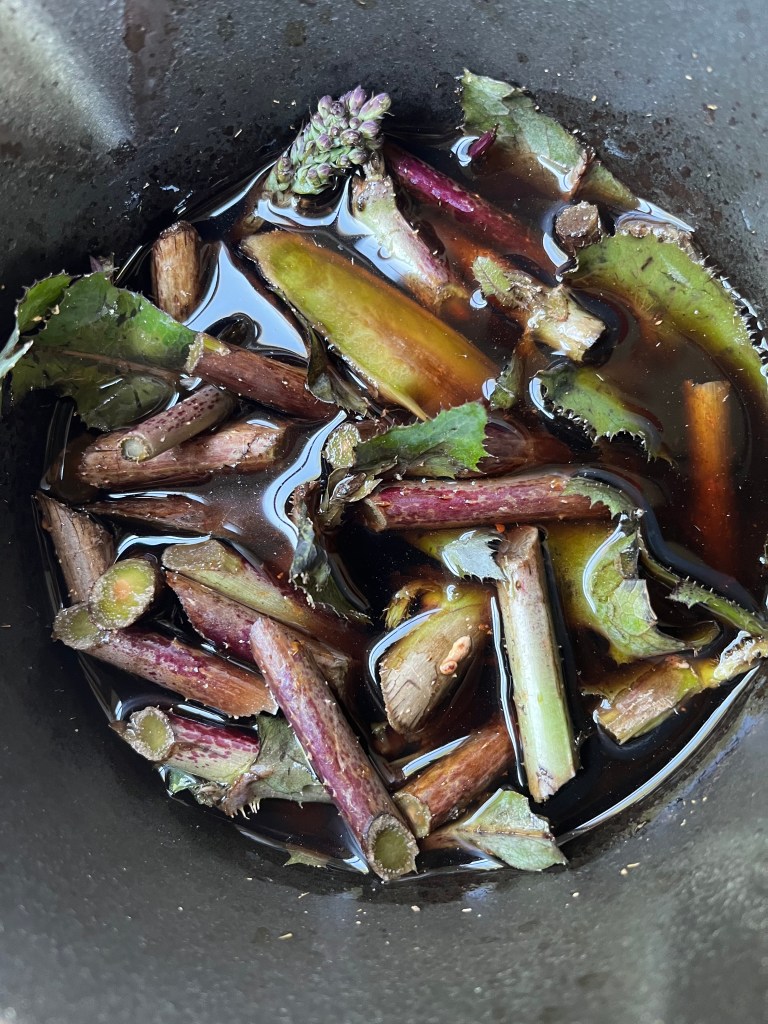
Lactuca virosa has toothed, jagged-edged leaves that clasp around the stem. It grows to 2m. The stem is bristly and purple-spotted. It looks quite scary actually!

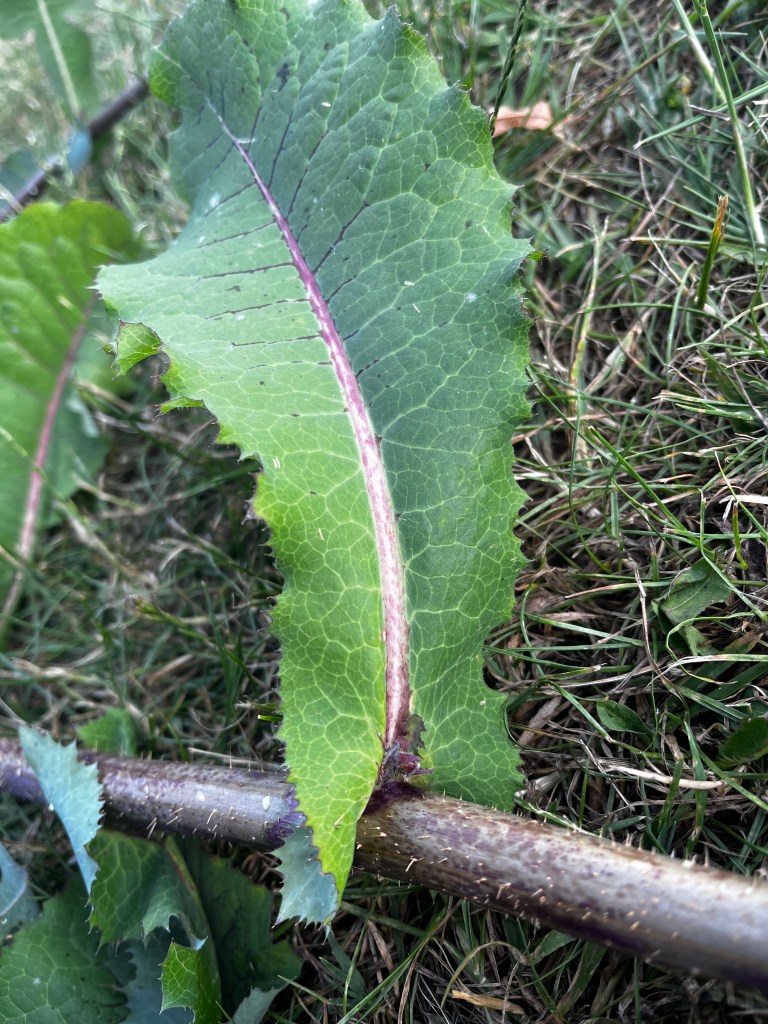
Both have compound flowers as they are in the Daisy family. Both have bitter white sap when cut. It’s this sap that contains the active lactucin.
To extract this, you need strong alcohol. Cut up the stem into 2.5cm lengths and stick it in enough vodka in a glass jar to cover. Yes, herbal medicine is all about booze! (This does, admittedly, make it more fun.)
Some people like to painstakingly squeeze all the sap out by hand. I salute these people for their dedication. But I don’t have the time.
Keep your tincture out of direct sunlight. Preferably in a blue or brown glass bottle. This not only looks cool, but protects it from sunlight which will denature the active ingredients.

4. PLANTAIN (Plantago sps)
All the Plantain species in the UK are edible. I haven’t used some of the more obscure ones medicinally, but I have used Broadleaf/Greater Plantain and Ribwort Plantain.
Plantains all have vertical veins running along their leaves from top to bottom. they are leathery and grow in rosettes low to the ground. The flower spike is small and green-pink, turning to brown seed head.

These plants are effective antihistamines and are anti-inflammatory. Their juice will soothe stings and insect bites. I’ve treated a lady who fell off her bike into a patch of nettles. Luckily there was a big patch of Ribwort Plantain nearby!
Simply crush up a leaf and place it on the bite or sting. Or make a Plantain salve. In my Herbal First Aid courses coming up, we will learn how to do this.
5. OPIUM POPPY (Papaver somniferum)
Okay, you want to save this one for an absolute SHTF situation. It is illegal to prepare Opium Poppy for consumption. However, if you are in a survival situation where you or somebody else is in extreme pain or dying, you are probably going to ignore this.
Opium is the raw material used to create morphine (as well as heroin). It is a very powerful painkiller and sedative. It is also highly physically addictive.
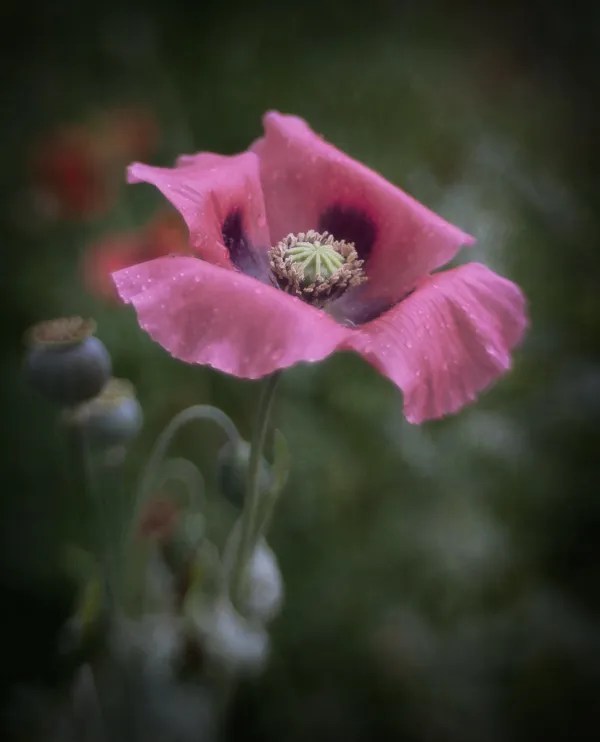

The opium comes from immature poppy seed heads while they are still green. Vertical cuts are made with a sharp tool. The white latex is collected. It turns brown and hardens.
I once tried opium toffee made by a friend from poppies growing in the local cemetery. I remember watching David Attenborough’s “Life Of Mammals” in a dream-like state. Next, I threw up my entire vegetarian roast dinner.
To turn this base opium into morphine, lime is added to the opium base in water and the opium base is boiled. The white substance that rises to the top is raw morphine.
CAUTION: THIS ACTIVITY IS ILLEGAL. FOR INFORMATION OR SHTF PURPOSES ONLY.
 HEDGEWITCH ADVENTURES Blog