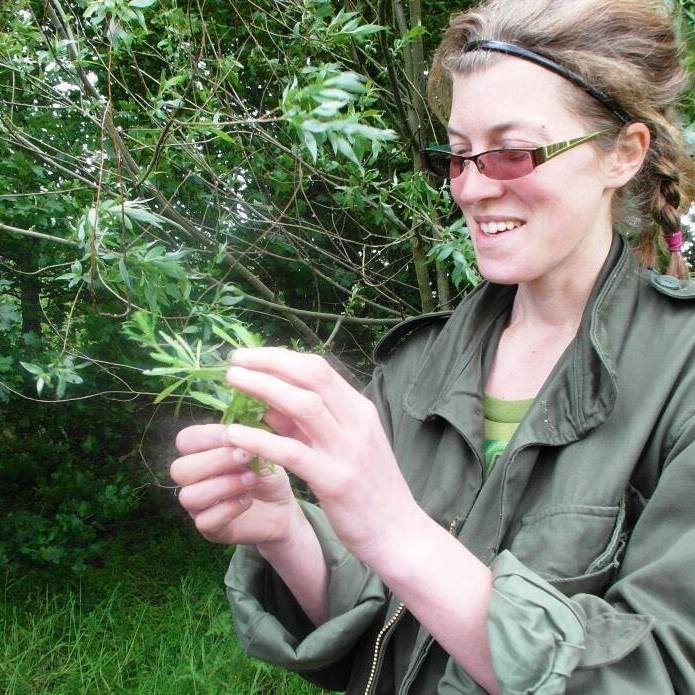
If the world system fails, which looks increasingly likely with the behaviour of certain grown-up toddlers… be apocalypse-ready.
Winter food
Winter is traditionally the time to harvest roots. Plants store energy in the form of carbohydrates by stocking it up in their roots, bulbs, corms, tubers or rhizomes. Don’t worry about the terminology, unless you want to. The important takeaway from this is the edibility (or not!) of underground parts of plants.
This is how prehistoric peoples got their staple carbohydrates and energy, as well as important minerals and vitamins, throughout the cold months. This is the original ‘Paleo Diet’.
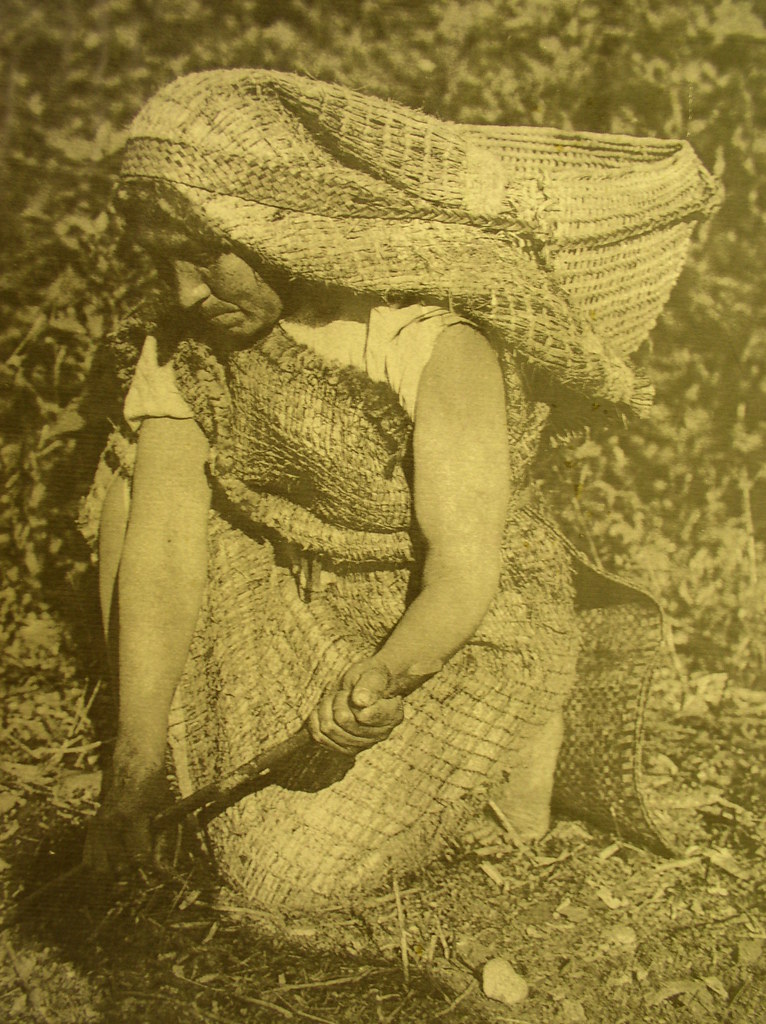
Native peoples like this American First Nation woman and the San bush people of the Kalahari hold a wealth of traditional knowledge about edible roots and tubers. So do Australian Aborigines.
The UK legal bit.
Digging up wild plants is illegal in the UK, unless you have the permission of the landowner, or it is your own land. Don’t be put off by this. Many landowners, including allotment holders, are happy for you to remove what they see as weeds from their land. (Obviously, if the supermarkets fail, all this will become highly irrelevant.)
Good idea – allotments, organic farms, suburban ‘waste’ land (ask the local council), organic gardens.
Not allowed – nature reserves, SSSI’s, graveyards.
Bad idea – brownfield industrial land, graveyards (due to build-up of heavy metals, and the obvious fact it’s disrespectful!).
Although I must admit, I have pinched a bit of horseradish root from the side of the river, and all anyone has ever done is smile at me. I only needed 10cm of this powerful herb. If i’d dug a crater, attitudes would have been different!


The sustainability bit
Obviously, when you dig up the entire root you kill the plant. That’s why its important to only take a small amount of what is there. Even better, collect some seeds (or buy some) and grow your own semi-feral roots in a patch of your own land.
With some plants, you can harvest just a few of the roots, leaving the big main tap root and many of the surface roots so the plant will survive.

WARNING : The health and safety bit
Roots are great sources of energy, but be aware of the history of the land they are on. Heavy metals and chemical pollutants can be present in the soil of brownfield land and building sites – land used for industry. I would also avoid harvesting roots in soil coated in herbicides or pesticides.
This is more likely to affect you if you’re eating foraged roots a lot, so if you accidentally ate one burdock root from a building site don’t start stressing out about it! Metals like arsenic and lead build up in the body over a long period of time. (Arsenic is VERY bad for you, but it takes a long period of exposure to kill you. Well that’s okay then..).

Now on to the fun part. Tasting roots!
1.DANDELION ROOTS
All parts of the dandelion are edible. The root is the sweetest part (the other parts being more bitter, but great for your digestion). Allotment holders are usually more than happy for you to dig up dandelion ‘weeds’ growing in their plot. Just ask.
I have dandelions growing in my allotment. On purpose. Pests don’t attack them, they need minimal fuss, and they are SO GOOD.
I’ve made Dandelion Stir Fry with cleaned and sliced roots. They’re great with soy sauce, ginger and garlic. Add fresh dandelion greens too if you can find them! This really does taste great.
So do fried Dandy Root Chips. If your’e looking for a ‘gateway dish’ to get kids into foraging, look no further than a bowl of crispy julienned (cut into fries) fried dandelion chips. They are sweet inside and fluffy, with just a hint of bitterness. Serve dusted in cumin or paprika, with lemon mayo or plain yoghurt with mango chutney.
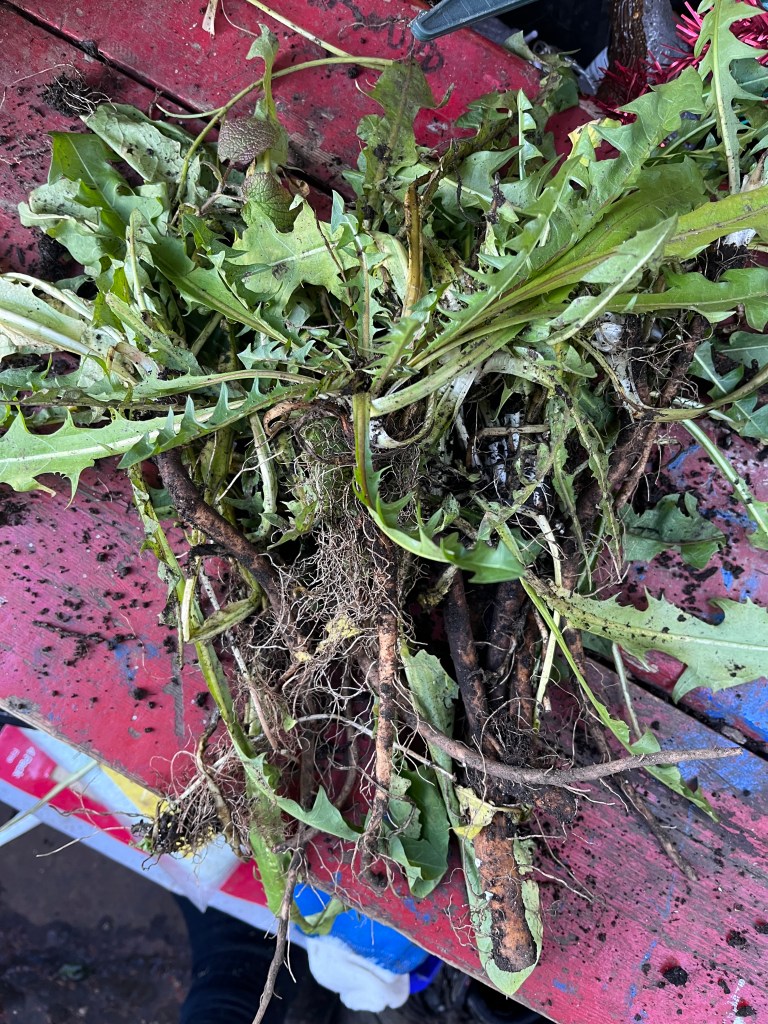
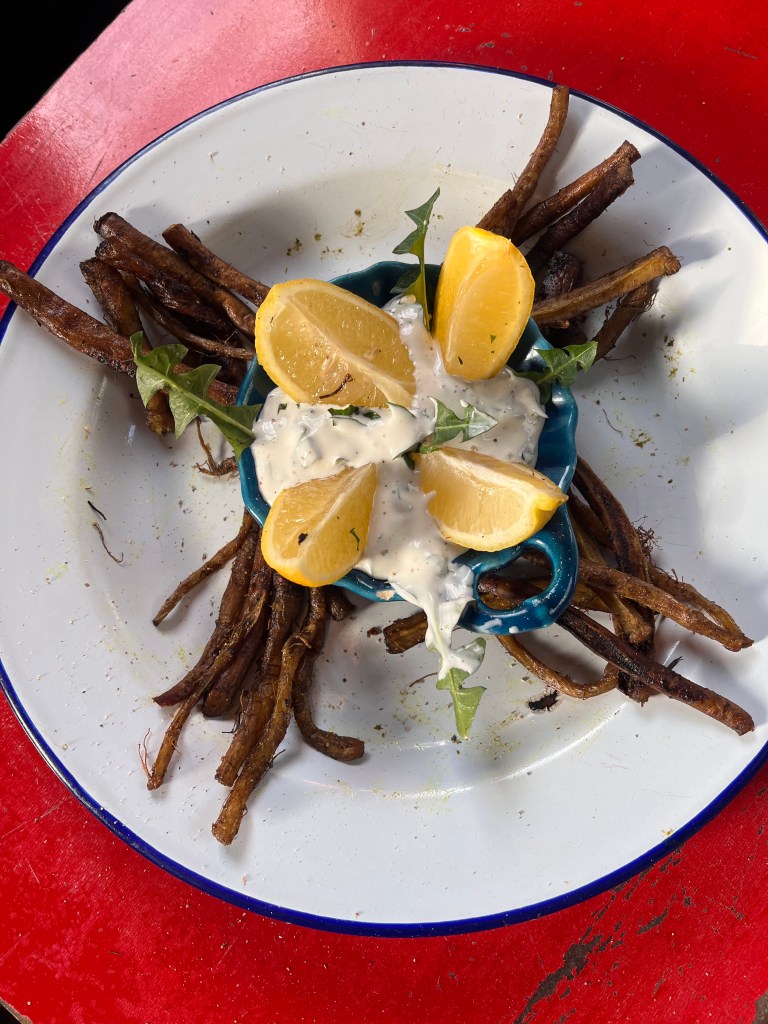
Seriously, mmm.
Dandelion Asian Rolls are a lovely light lunch. Add raw (cleaned) sliced root, mango/wild fruit jelly, dandelion leaves and edible flowers to a rice paper pancake. Add a little soft cheese and roll up.
You can try roasting the roots and making Dandelion coffee. (Personally, I don’t bother as it has no caffeine and is a faff to make.) I would rather eat them fresh.
Verdict: A resounding 9/10!
2.BURDOCK ROOTS
I’ve banged on a lot about Burdock (Arctium lappa/minor), and i’m going to bang on some more. Burdock root is a) delicious b) medicinal and c) large enough to make dinner out of.
Burdock grows as tall as a person in its second year, but you want the first-year, young rosettes of cabbagy leaves. These roots are nice and tender. Check where you have seen young plants in the autumn and come back to harvest the in the winter.
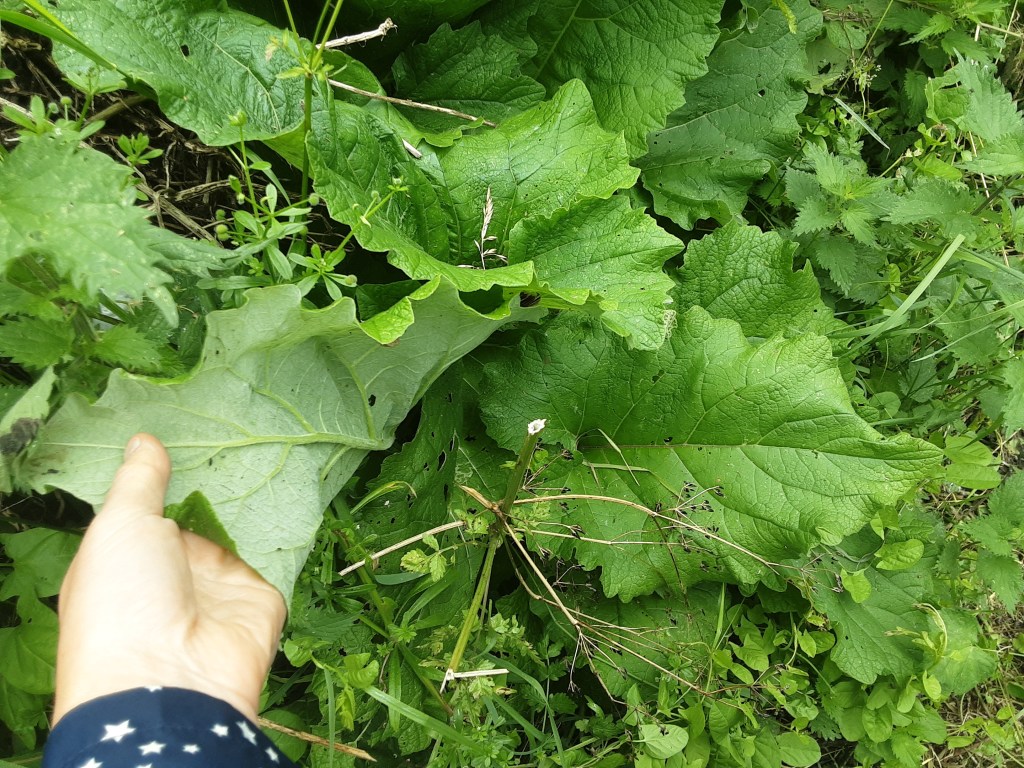
I’m lucky enough to have a lot of burdock at the back of my allotment, so I can harvest the roots with impunity. I even sowed burdock seed, which was stupid, as now I can’t get rid of the stuff or grow anything else in that patch as it keeps coming up. Fortunately, it’s very tasty – a cross between parsnip and aniseed.
Burdock root will turn from white to purple when cut in the air. Be not afraid. It is harmless and nutritious. It even helps your body get rid of toxins. Like post Xmas alcohol.
I’ve made Burdock Burgers by grating it and mixing with egg and seeds. I’ve cut into rounds, boiled then rolled in sesame seeds for tapas. I’ve roasted it in a tin and at the edge of the fire in the embers. Yum.
Verdict: 9/10, taking one point off for the annoying seeds.

3.MARSH WOUNDWORT RHIZOMES
Stachys palustris, or Marsh Woundwort, is part of the Betony/Mint family. It’s fairly common in Europe, the UK and North America. Marsh Woundwort grows in damp clay soil, usually near water. Bees love it.
It has quite attractive purple flowers on a long spike, and long leaves with fine serrations. It’s hairy. Hedge Woundwort has heart shaped leaves and Betony’s are rectangular with a pointed tip. This is important, as some roots are barely edible…and some taste even worse. Oops, spoiler alert.
You can buy seed and grow it in damp clay soil.
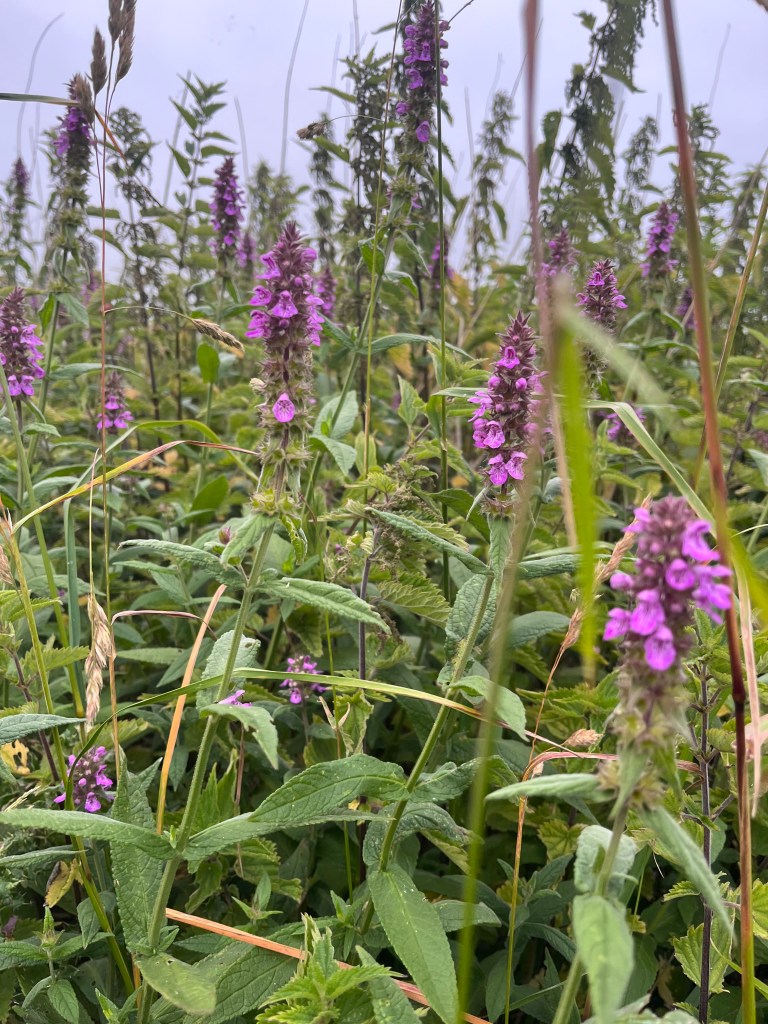
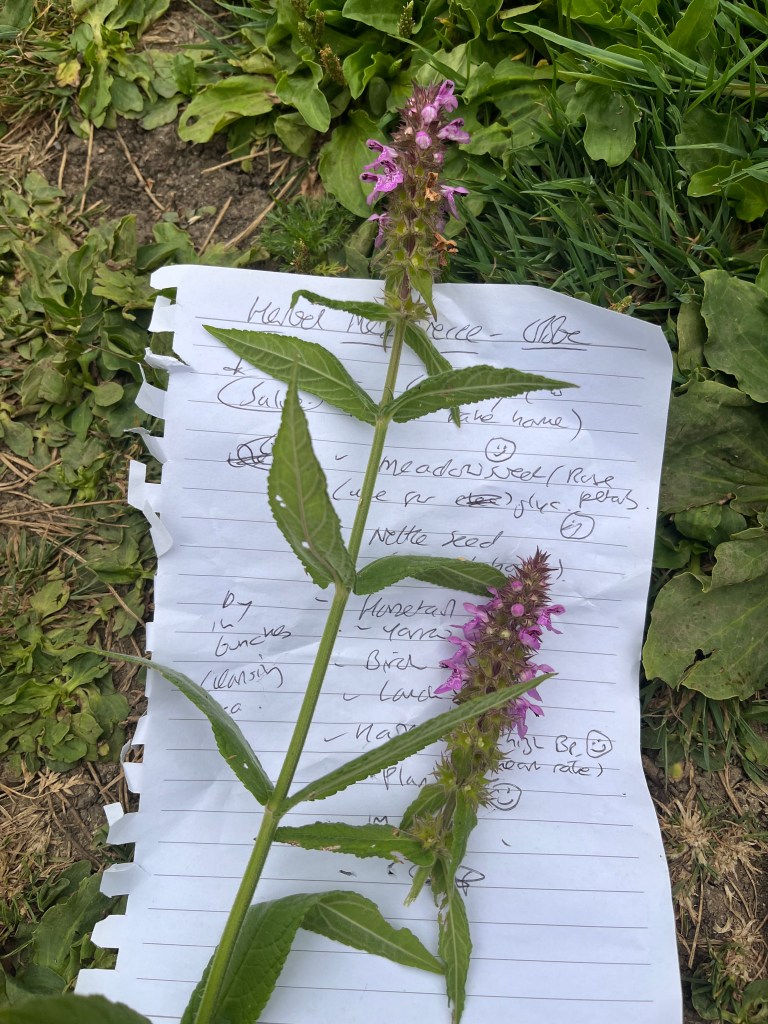
The roots are quite easy to get at as long as the ground is not frozen. They lie near the top 10-20cm of soil. European (and especially Polish) people harvested and even grew this root for food until recently, when it was ousted by potato.
They’re knobbly lil buggers…here’s a mug shot of raw and fried Marsh Woundwort roots.
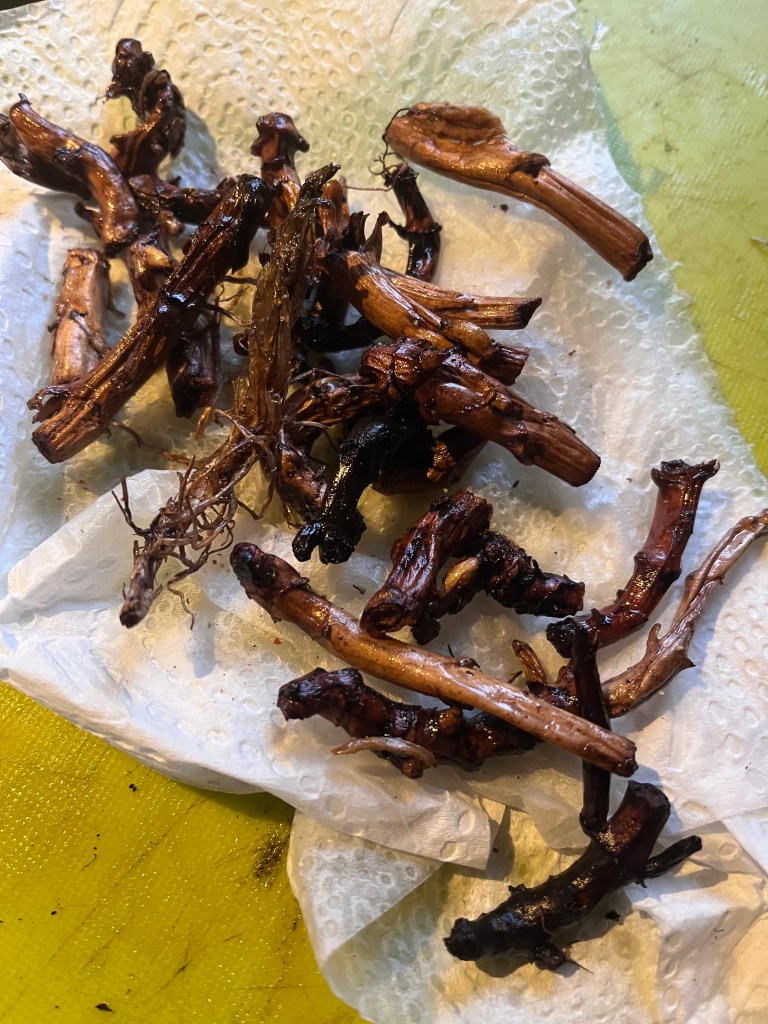
Polish ethnobotanist Lukasz Luczaj is a great person to ask about Marsh Woundwort. He has some good videos of harvesting a 4kg stash of Woundwort roots from a vole burrow. He has written a paper on the edibility of this plant together with Svanberg and Koehler.
The literature out there suggests an astringent taste when raw, which goes away to leave a NUTTY POTATO flavour when cooked, or dried and made into flour. OK, so I ate one raw. I ended up spitting it out into the bin pretty fast. The bitter astringency needed water (and a large chunk of Toblerone) to make it go away.
I boiled the roots (after cleansing them in about 5 changes of water). After 10 minutes of boiling, I ate another one. It STILL tasted terrible, though the first few seconds were acceptable before the awful taste came back.
This root contains stachyose, which the human body cannot digest into energy, as well as some carbohydrates. Stachyose is harmless, but to get the most energy out of Marsh Woundwort, it’s recommended to either fry it or lacto-ferment it.
I fried the living hell out of it, and guess what? It still tasted bad. Maybe I harvested the roots too late in the season (mid-January). The next step is to ferment it.
So far, it’s on my naughty list, but it will keep you alive, if unhappy, in the coming apocalypse.
Verdict: A measly 2/10.
4. THISTLE ROOTS
I’ve already written at length about the top parts of thistles. The roots are also edible. They contain inulin, which makes you fart, but they are otherwise a great source of energy. Inulin improves the microbiome in your gut, helping you digest calcium. It’s been shown to help with diabetes.
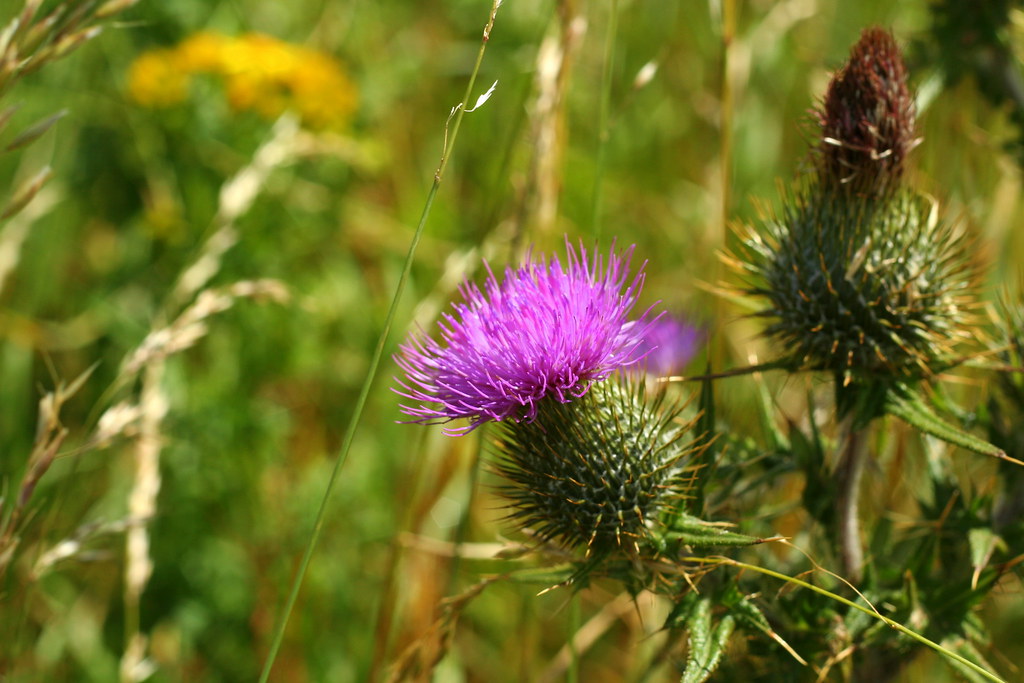
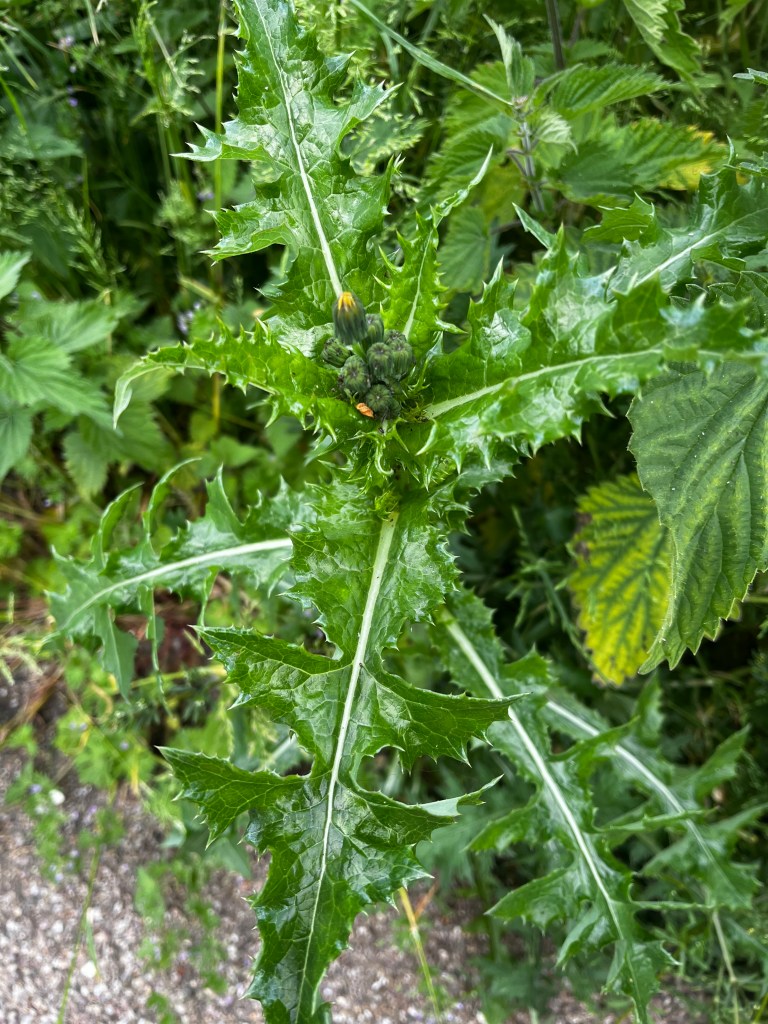
There’s many species of thistle, but if your’re harvesting roots for dinner, I’d go for the bigger ones. Use thick gloves and a big garden fork. Yet again, many landowners will be over the moon to have you take away their thistles. More fool them!!
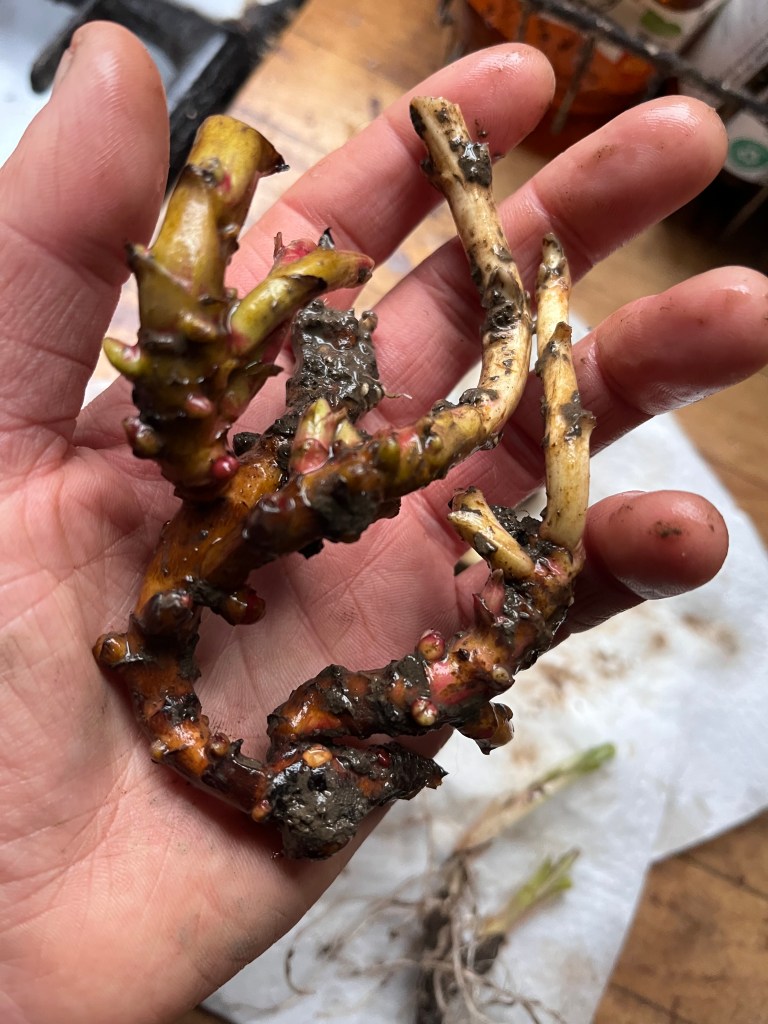
I found a big old Spear Thistle rosette in the herb bed and smaller thistles in my window box, so I dug up the roots. Ask farmers and field owners too, especially if they’ve got a meadow they’ve let go to grass. Note the pink blush on the root.
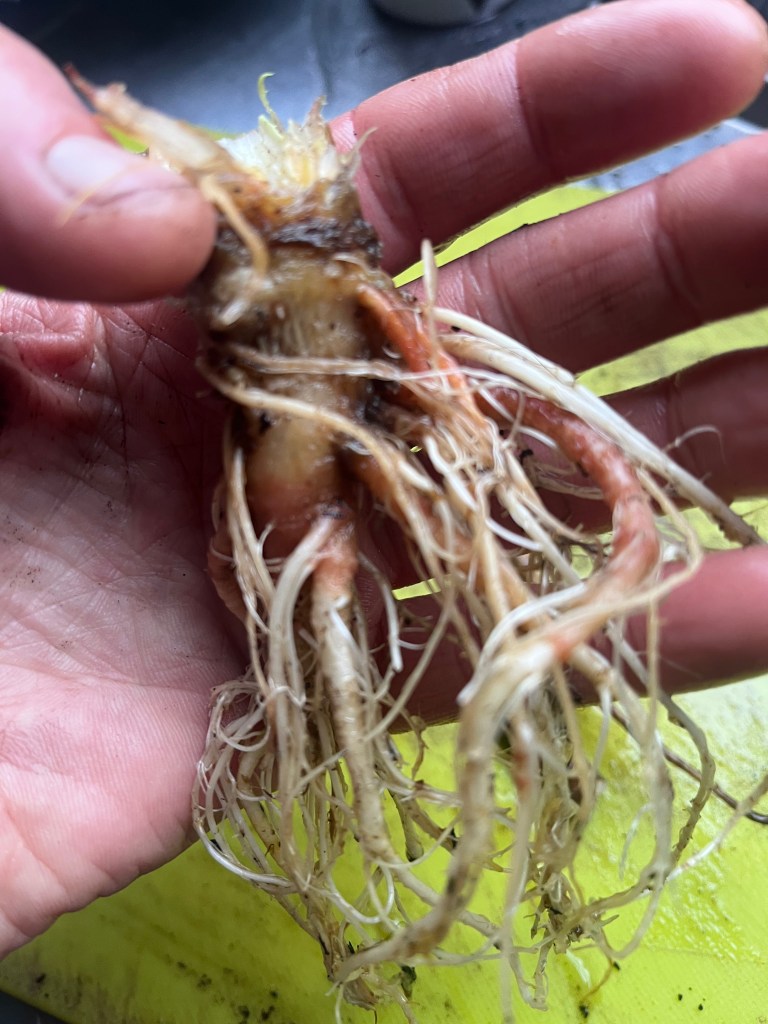
It tastes fairly bitter raw, but smells sweet and grassy. Fried, it starts off with a pleasant artichoke taste (thistles are closely related to artichoke) – and then gets bitter.
Verdict: 5/10
5. SILVERWEED ROOTS
Silverweed (Potentilla argenta) is a common wayside herb. Ray Mears and Prof Gordon Hillman banged on about this weed as a source of carbs in a crisis. Myself and an old boyfriend harvested some one year. It took ages to clean the mass of thin, spaghetti-like roots.
It’s a mat-forming, low-growing plant with a yellow flower that resembles a buttercup. The divided leaflets are silvery on the underside, hence the Latin second half of the name. ‘Argentum’ means ‘silver’.
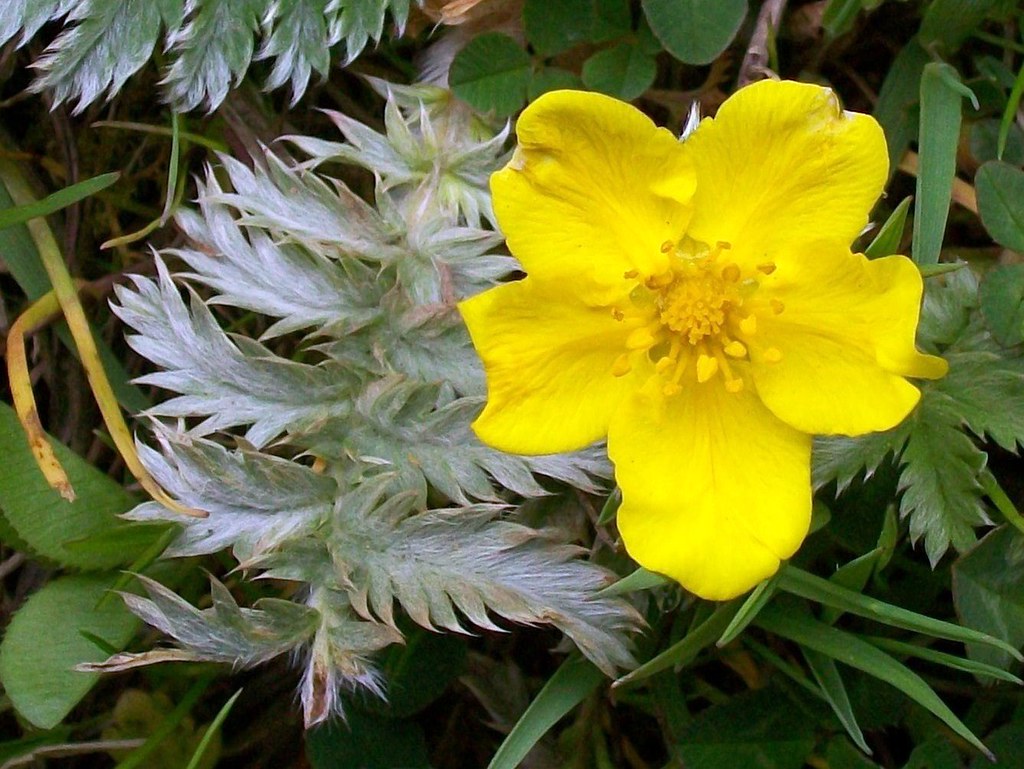
As they were so thin, they’d likely be burnt to a crisp if roasted, so we boiled them on a camp stove. Ray Mears said they tasted nutty. All I could taste, quite honestly, was the soil they came in. At least they don’t taste actively nasty like the Marsh Woundwort. Cleaned well and soaked in pesto or tomato sauce, one can choke them down!!
Yet again, possibly at a different time of year, or in a different location, we might have had a tastier experience.
PS: After re-reading Ray Mears and Gordon Hillman’s experience of cooking this root in ‘Wild Food’, I realise now we were eating the wrong roots. We should have eaten the thicker storage roots, not the stringy fibrous ones. Does anyone else have experience of eating the storage roots?
Verdict: 5/10
6.PIGNUTS
Pignuts (Conopodium majus) are the truffle of the world of roots. They are a delicate, small member of the Carrot family – the Umbellifers. They taste great even raw, like a cross between celery and hazelnut. As I stated in a previous post, they grow in thick mats on the banks outside my son’s school.

I’ve tried a couple of them when foraging on the North Downs Way, which is chalk grassland, but I wouldn’t take any from where I live now because they seem to be quite rare in this area, even if it was allowed.
You can buy Pignut seed or plugs and grow them in semi-shade or damp meadow areas. The top growth dies back by June, but the Pignut survives underground as a hazel-nut-sized tuber on the end of a long, thin root. In this way, it’s adapted (like Wild Garlic) to make use of Spring sunshine before trees put out their leaves.
Grate into a salad, or boil for a few minutes and toss in a dressing of lemon and olive oil with herbs. Mmm!
Verdict: 10/10. Even tastes good raw.
Okay, I hope that helps y’all with the knowledge that IF the poo hits the proverbial fan worldwide, we will still be able to survive. Grow your favourites if you can, even if it’s just a window box or guerilla gardening on wasteland. Save seed, and share.
Long live the Evolution!
xx Hedgewitch Kat xx
 HEDGEWITCH ADVENTURES Blog