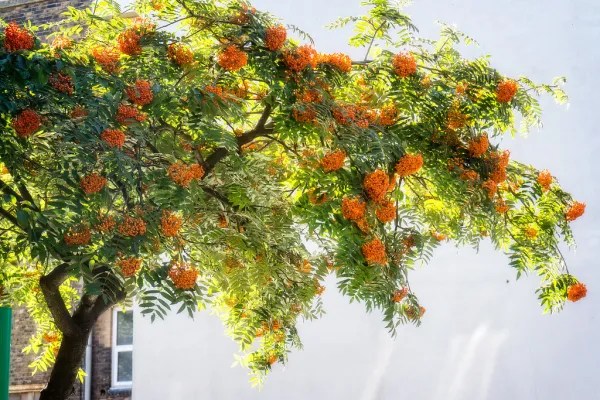
Rowan trees are aglow with fire engine red berries in council car parks and waysides everywhere. They’re a popular landscaping tree, so chances are there’ll be one near you. They love growing high up, so check hills too.
Rowan, or Mountain Ash, is known as Sorbus aucuparia in the botanical community. It’s a member of the Rosaceae, or Rose family – home of some great edibles. Rowan can live around 200 years, which is kind of young for a tree.
Read on to find out how you can make a delicious jelly and dowse for underground water or minerals using Rowan!
How to recognise Rowan
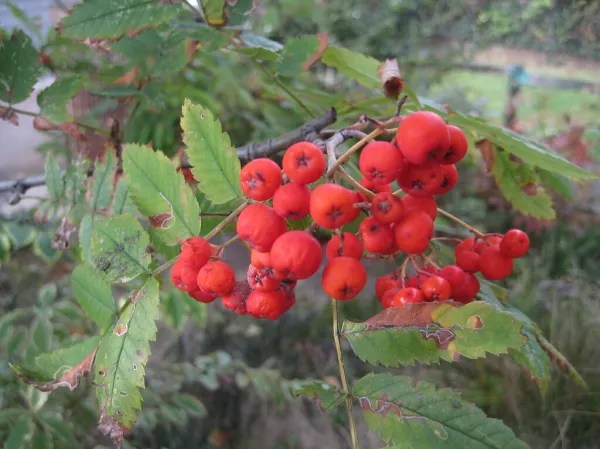
Rowan is a small, slender tree with a pale silver trunk. The leaves are pinnate (divided into smaller leaflets). Each of these leaflets is toothed around the edges. When it flowers, the 1 cm wide flowers are white and have 5 petals.
The berry-like fruits are 1 cm in diameter. They hang in large bunches and can range from deep orange to scarlet.
In winter, the youngest twigs are hairy, only becoming smooth later. The buds are hairy. The bark is quite smooth and silvery grey.
Rowan V Dark Magick
Rowan has long been known as a tree that could protect you against dark witchcraft. Folk stories tell of brave heroines armed with a Rowan circlet or sprig, beating the fell magicks of malicious crones.
Indeed, Rowan’s Celtic name is ‘fid na ndruad’, or the Wizard’s Tree. Though I hope indeed they are not implying wizardry is better than witchcraft! That’s sexist!!
You can see some ancient curse-proof Rowan loops in the Witchcraft and Trial by Ordeal section of the excellent Pitt Rivers Museum, Oxford.

Rowan’s Edible Berry
If you dare to pop a rowan berry into your mouth raw, chances are you won’t be able to swallow it. It’s more bitter than a lemon and much more astringent!
Rowan berries need to be sweetened with sugar or other fruits. Once you’ve done this, they contain carotin, pectin and essential oil. They strengthen your immune system, which is always a good idea at this time of year. Vitamin C and Vitamin A are also present in Rowan.
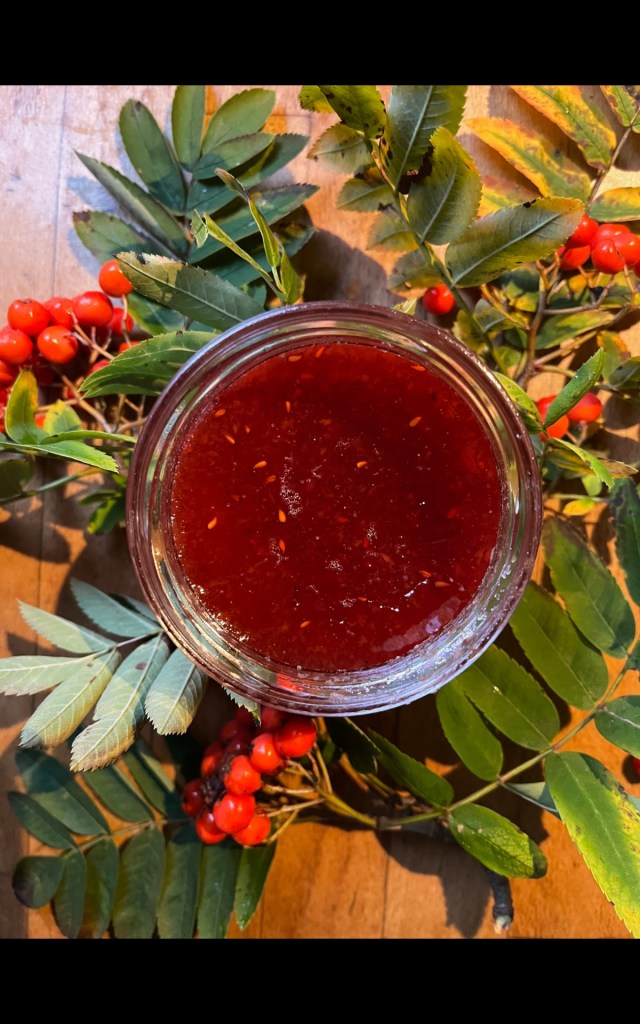
The most traditional way to use Rowan is to make the berries into a tart Rowan Jelly. You can use this to marinade game meat like pigeon, or just use it as a sauce alongside. See recipe below.
ROWAN JELLY RECIPE
1kg rowan berries
1kg crab apples/tart apples
For every 600ml extracted juice, 450g white sugar
1 lemon
Square of natural cotton muslin 60x60cm or more
You need to add apples (crab or otherwise) because they contain pectin. This sets jams and jellies.
- Chop crab apples in quarters and add to berries in a large pan. Cover with water and bring to the boil. Simmer for 20mins until soft.
- Mash with a potato masher if it helps.
- Find a square of non-dyed muslin at least 60×60 cm. (Though I have also used fine denier tights and my son’s old school shirt in a pinch!)
- Hang the muslin over a large clean pan or jar. Slowly pour in the rowan apple mix. As it starts to sink, grab the top and tie it up so it hangs from something a bit higher. It should look like one of those cute travelling knapsacks on a stick you read about in Grimm’s fairy tales!
- Let it slowly drip into the pan/jar overnight. DO NOT SQUEEZE IT, no matter how impatient you get. If you squeeze it, the jelly will be cloudy. But it will still taste nice. (Hey, you can tell I’ve squeezed it before can’t you…)
- Put the resulting juice ino a measuring jug. For every 600ml juice, add 450g white sugar.
- Add the juice of lemon.
- Boil for 10 minutes til you can see the mix get thicker. The bubbles will pop more slowly. Dip a cold spoon in to check – the jelly will congeal on the back if it is ready.
- Pour into a sterilised jam jar. Wait til set and add the lid. Voila! Enjoywith rich, gamey foods like wood pigeon, or simply enjoy with cheese and crackers.
ROWAN DIVINING RODS
Rowan, as well as hazel, has been used historically as a divining rod. The twig needs to be green so it’s flexible. Dowsing is an ancient art whereby the dowser can locate water or minerals. It’s also called ‘water witching’ – what a great name!
My dad could find water this way. He could also find pound coins we hid on the beach as kids.
- Cut a green Rowan twig roughly 45cm long. It must have a fork in it with forks of equal length (you can cut them).
- Make sure the forks are of equal thickness. They can be quite long, as long as you have at least 10-15cm of main twig too.
- Hold one end of the fork in each hand. Traditionally, hold it palms upward and with thumbs held back.
- The end of the twig (the not forked bit) should be pointing up at roughly 45 degrees toward the sky.
- Let your mind relax and go blank. Breathe slowly.
- Walk over a water/mineral source. The twig end should dip or pull when you go over it. Try it with a bowl of water first!
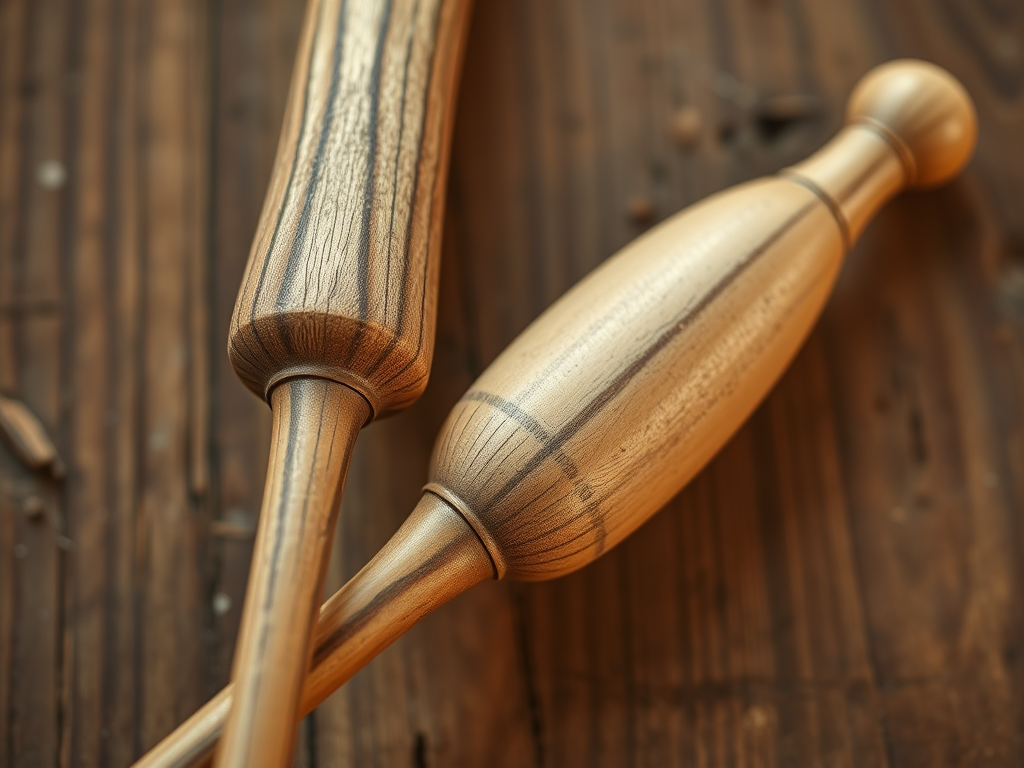
ROWAN PROTECTIVE CROSS CHARM
Try making a protective Rowan charm if you like. Make sure to add some berries, as the colour red historically wards off the evil eye in Britain. You will need two green and flexible Rowan twigs and several handfuls of berries to decorate.
Check the link here:
Now for the obligatory course flogging bit…
Remember, I have 2 more Winter Tree I.D. courses coming up. We’ll be learning how to identify winter trees from bark, buds etc – also doing some bark rubbings – then heading back to a cosy pub for a Tree ID Quiz.
Know your trees!! It may well save you when the world economy breaks down.
Families welcome, though due to the walk to the site, over 5’s recommended.
Check out “Winter Tree I.D. & Pub Quiz (Family Friendly)” on Eventbrite!
Date: Sat, 10 Jan, 10:00
Location: The Globe Inn
Check out “Winter Tree ID & Pub Quiz (Family Friendly)” on Eventbrite!
Date: Sat, 7 Feb, 10:00
Location: The Globe Inn
xx Hedgewitch Kat xx
 hedgewitchadventuresdotcom