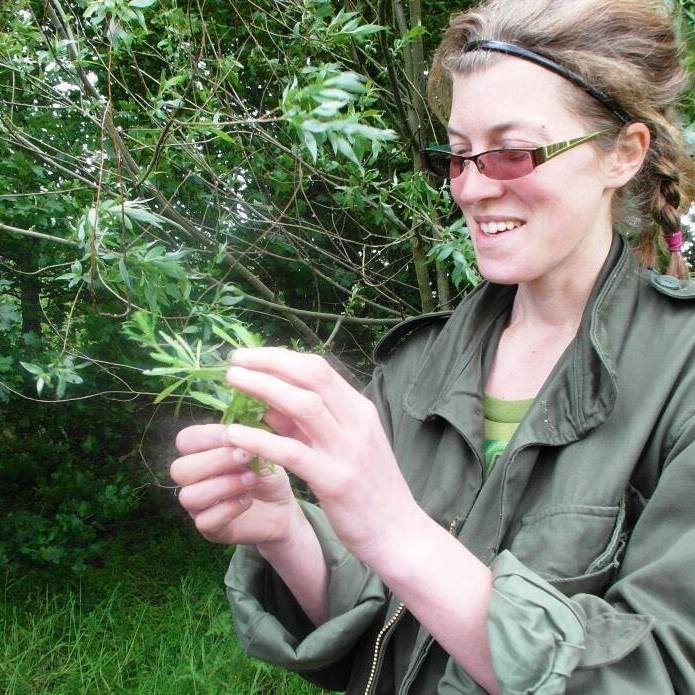
A bit belated this one. October is a busy month for foragers in temperate zones.
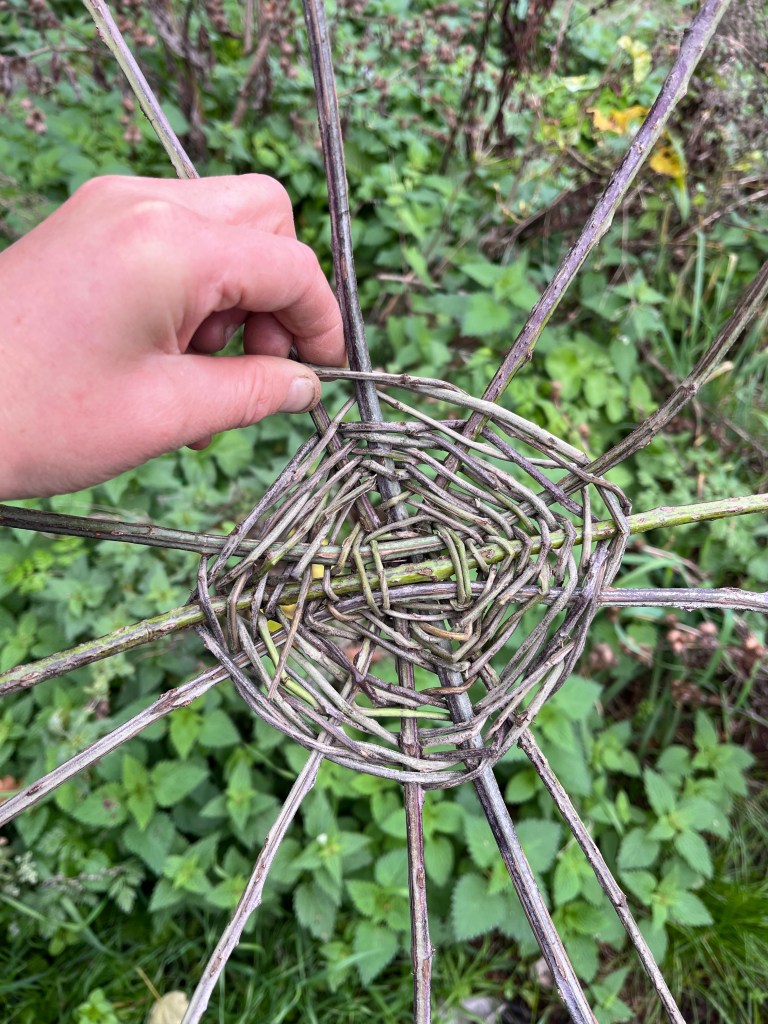
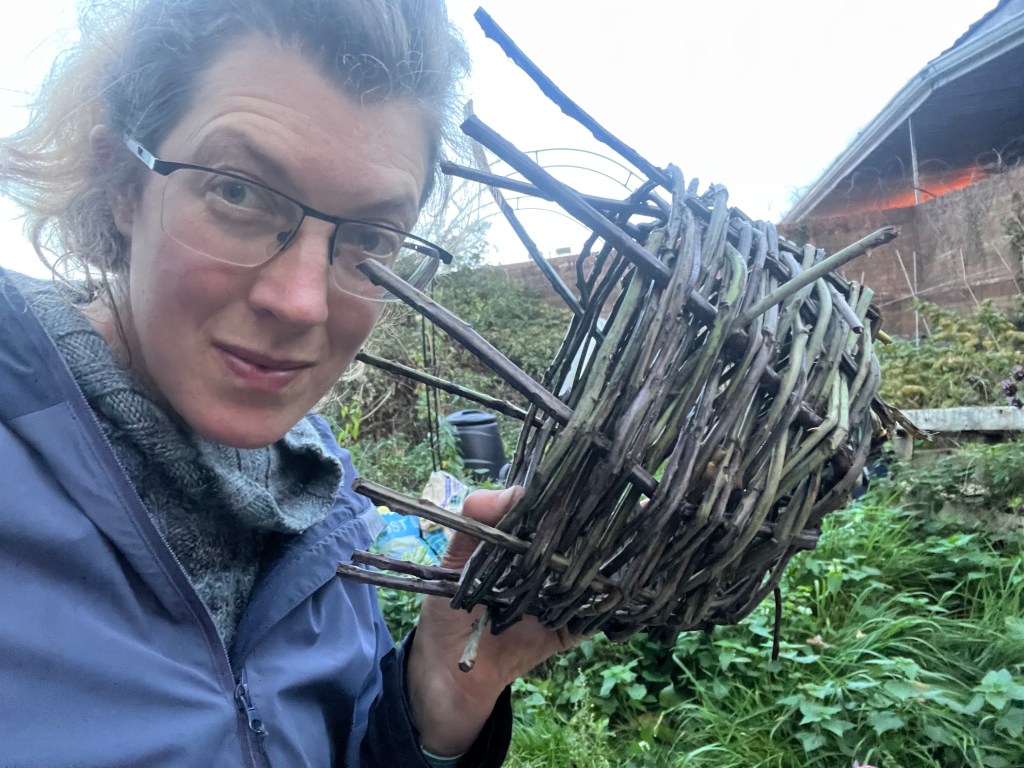
I’ve been testing out brambles for various types of basketry for 2 bushcraft/homesteading magazines.
Brambles are hard-wearing if you can evade and conquer the thorns! The best time to harvest bramble for this is actually summer, as they are more flexible then. However, if you find some green fresh runners (and you will…) why not give it a go with a willow or hazel frame.
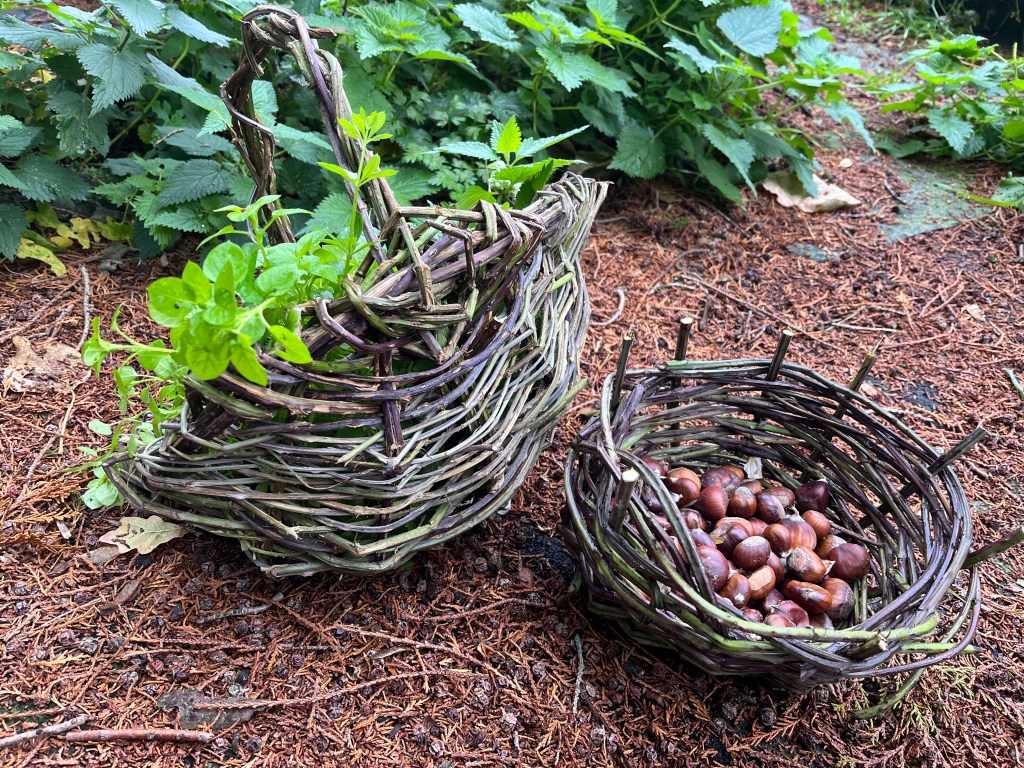
Below I’ve harvested Chickweed (Stellaria media) and Nettle, both stalwarts in my soups and curries at this time of year. The sweet chestnuts are from Ashridge. These baskets allow plenty of air flow, so food doesn’t turn into slime like it does in a fridge!
I’ve been recce’ing local woods and parks for my up and coming Winter Tree ID courses. You don’t need to go to Wandsworth Arboretum or Kew Gardens (though both are lovely) to learn fascinating facts about trees.
Shamefully enough, I remember jumping the broken glass-topped wall of Kew Gardens in my uni days using a thick coat as padding. We ran about in the dark giggling, and tasted the Szuchuan Pepper bush. I apologise, and have paid to get in several times since then.
Is this bark covered in lenticels (they look like eyes!) a young Grey, White or Lombardy Poplar? White Poplar was sacred to the Greek demi-god Hercules. Poplar leaves have a gorgeous white felt on the underside. These trees are dioecious, meaning they have girl and boy trees that need to be planted near each other to make seed babies. Haha.
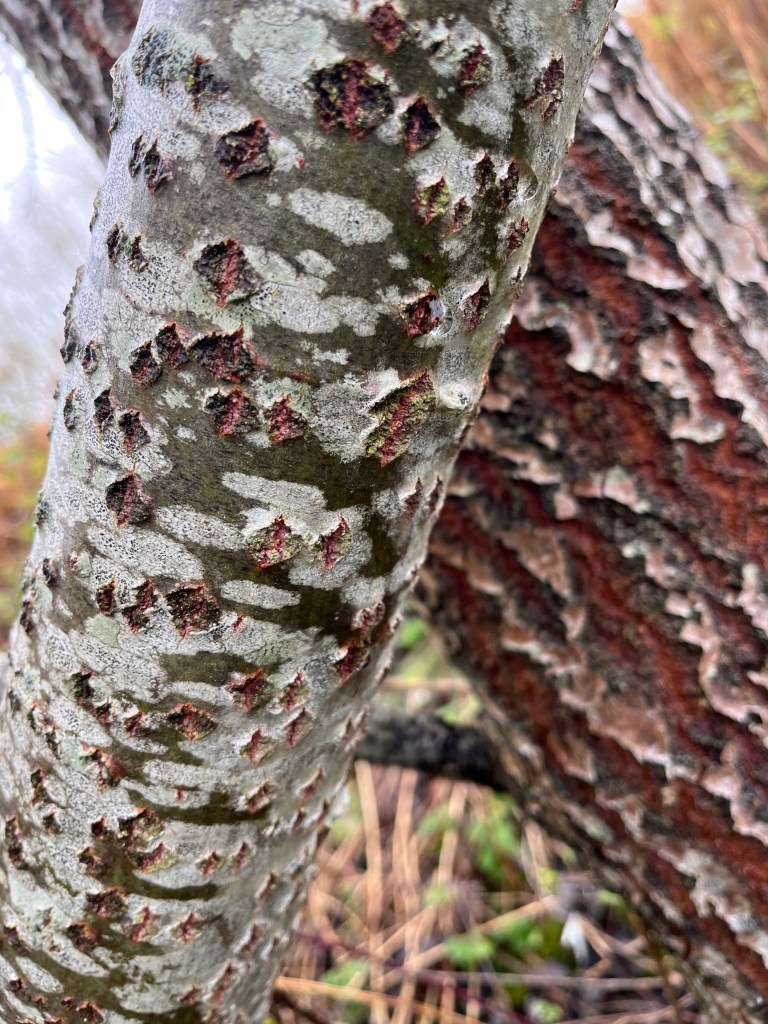
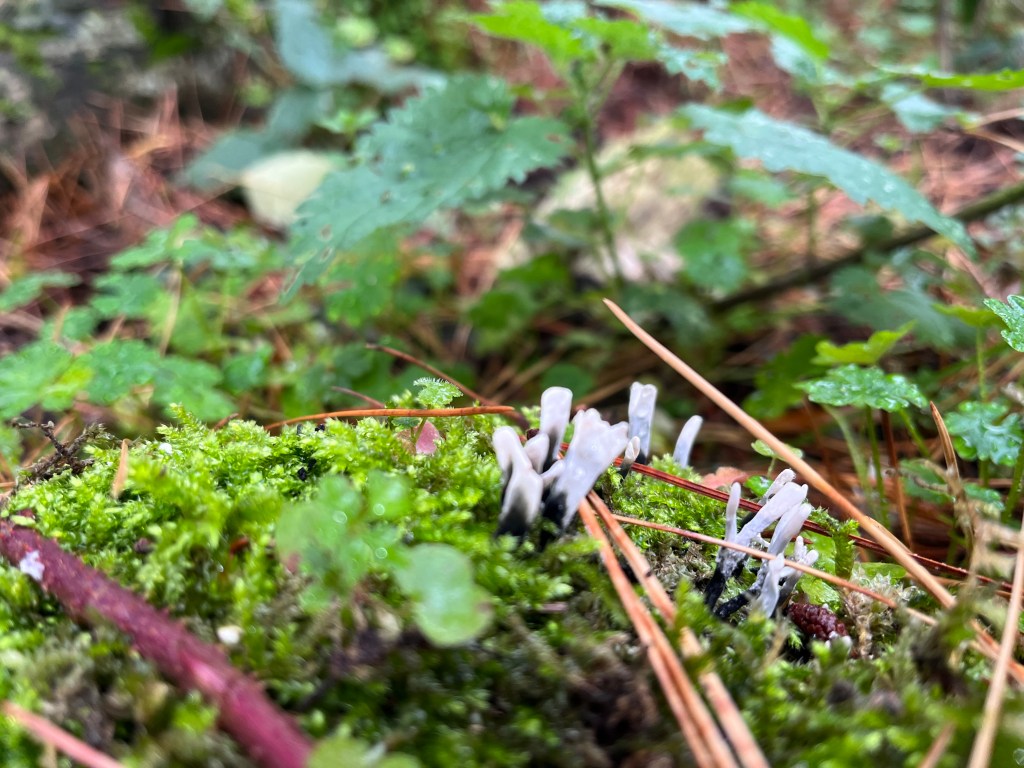
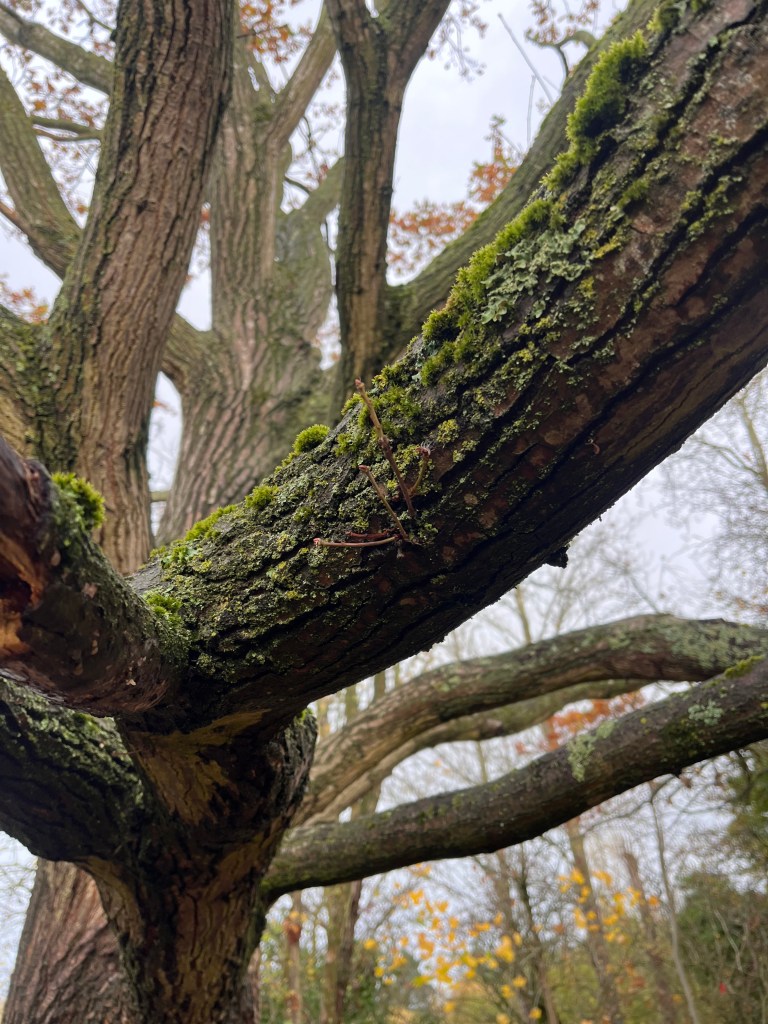
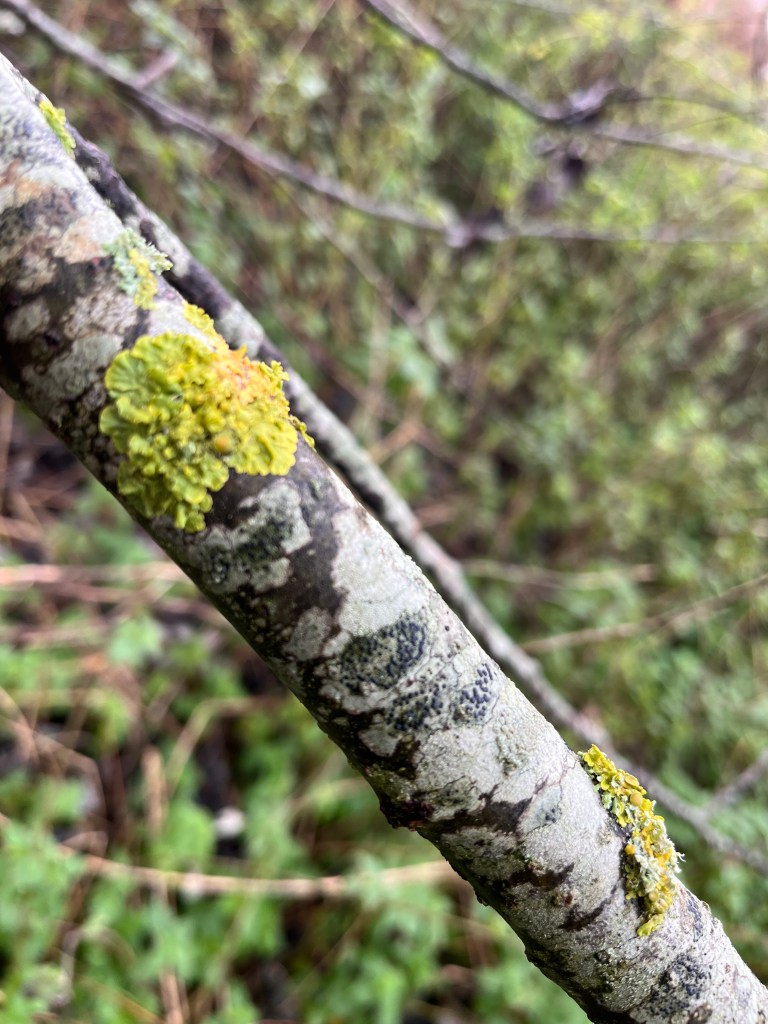
In October and mild winters onwards, mosses and lichens reign, dripping off the bark of trees. These mini worlds are the preserve of whole ecosystems of tiny insects, fungi and mites. Bryologists study mosses, known as bryophytes. The best place to see mosses and lichens is the West of England, which has the most rainfall.
There’s a great Podcast on bryology at ‘Ologies’, presented by Alie Ward. She interviews Robin Wall Kimmerer, indigenous professor of ecology and author of ‘Braiding Sweetgrass’ and ‘Gathering Moss’.
https://www.alieward.com/ologies/bryologyencore
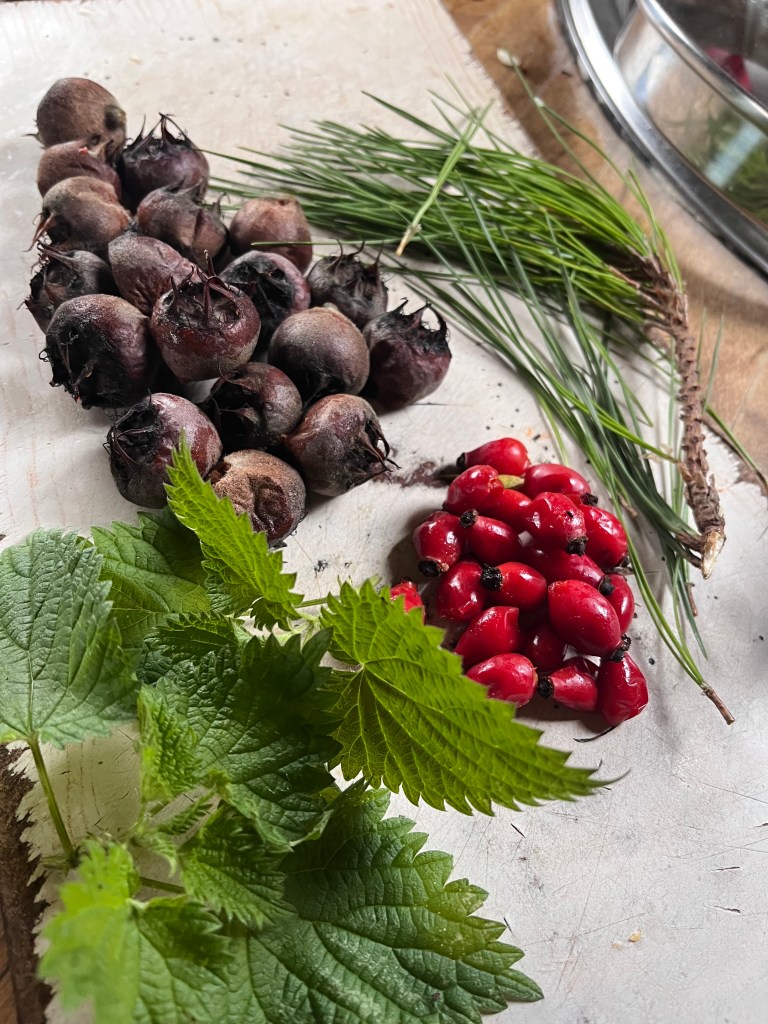
I’ve been collecting Dog Rose hips early. Normally they need a spell of frost to blet, but this year they’ve been ripe since September. These winter fruits give us a much needed Vitamin C super-boost.
Try squeezing them out and eating them raw for maximum Vitamin C and zero effort. Or if you feel like impressing someone, make raw rosehip sorbet or cook them for fruit leather. Make sure to add hawthorn berries or crab apples to help your leather set, a 50:50 ratio works well.




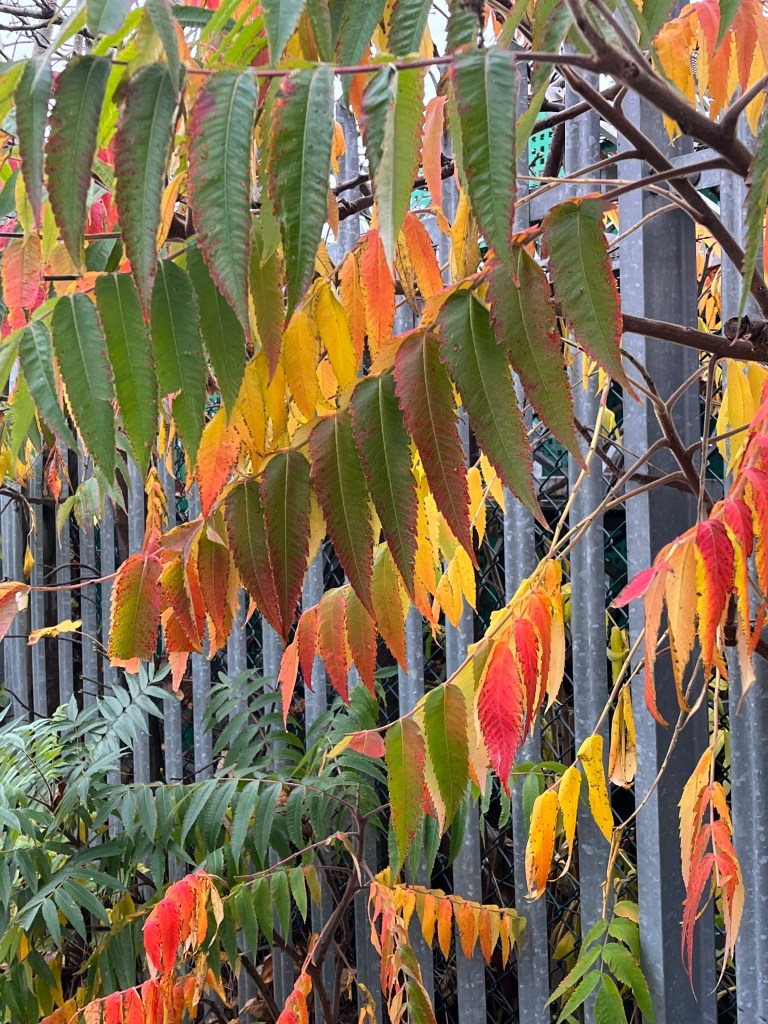
Check out this beautiful Sumac tree. Stag’s Horn Sumac (Rhus typhina) is edible, unlike Poison Sumac. It has fuzzy young twigs and red flowers that rise candle-like in towers. You can use these to make Sumac lemonade as they are very tangy.
At this time of year we can just admire the autumn foliage and make plans to come back in Summer!
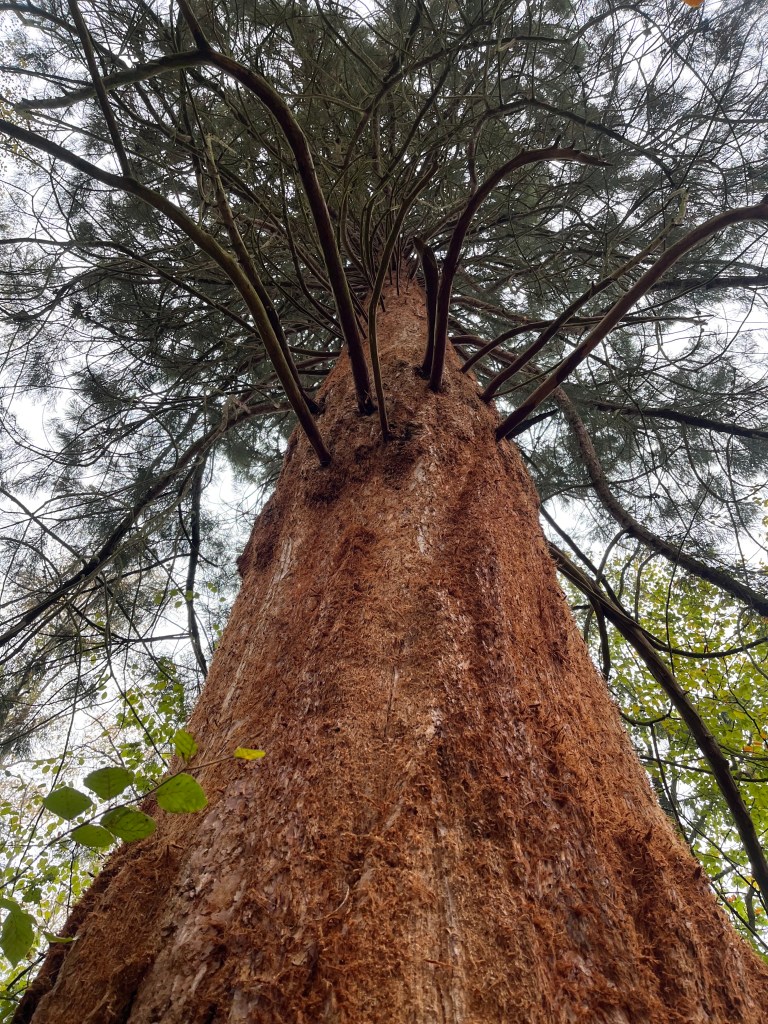
Last but truly NOT least, let’s admire this phenomenal Giant Sequoia or Redwood tree, Wellingtonia. A US example of this tree lived 3000 years. When it was cut down, a piano player could play with an audience of 40 inside its hollowed-out (and carpeted!) trunk.
Try pushing into the soft bark with a finger. Strange and beautiful.
Check out “Winter Tree ID & Pub Quiz (Family Friendly)” on Eventbrite!
Date: Sat, 13 Dec, 10:00
Location: The Globe Inn
Check out “Winter Tree I.D. & Pub Quiz (Family Friendly)” on Eventbrite!
Date: Sat, 10 Jan 2026, 10:00
Location: The Globe Inn
Check out “Winter Tree ID & Pub Quiz (Family Friendly)” on Eventbrite!
Date: Sat, 7 Feb 2026, 10:00
Location: The Globe Inn
See you there…
xx Hedgewitch Kat xx
 hedgewitchadventuresdotcom