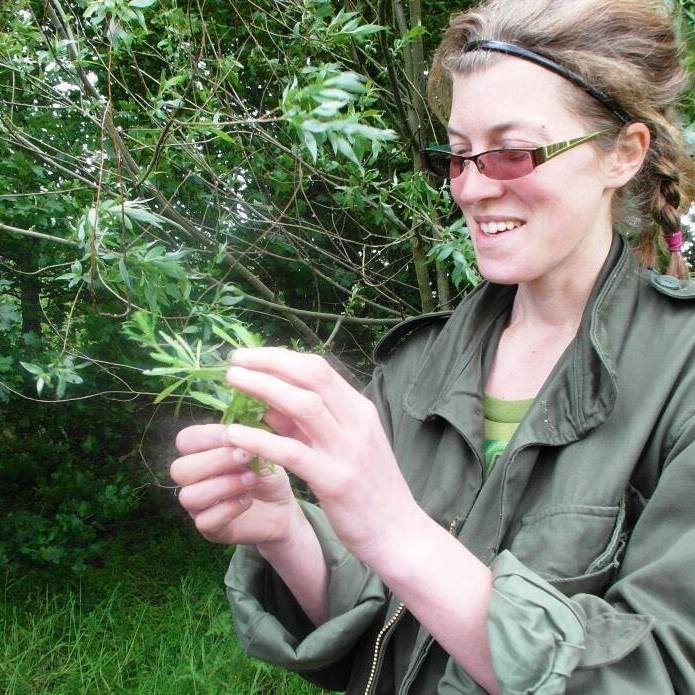
This Mon in November I hopped out in the brilliant autumn sunshine…then submerged myself in the gloom of the dampest part of the wood. My mission – to scout out fantastic fungi.
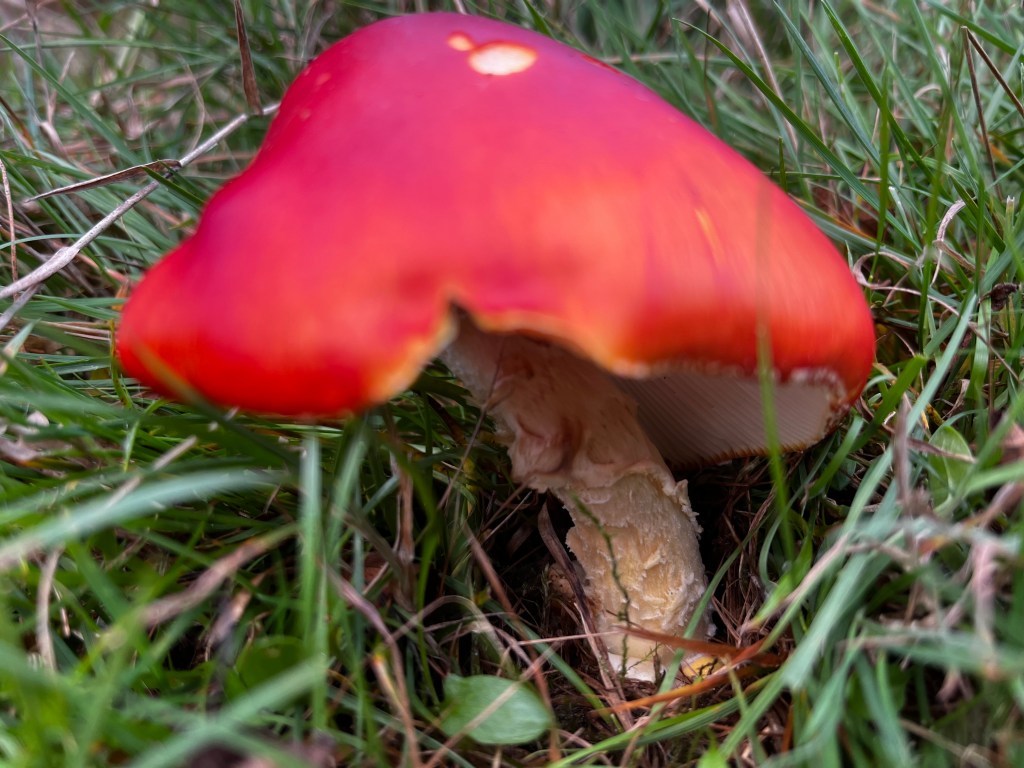
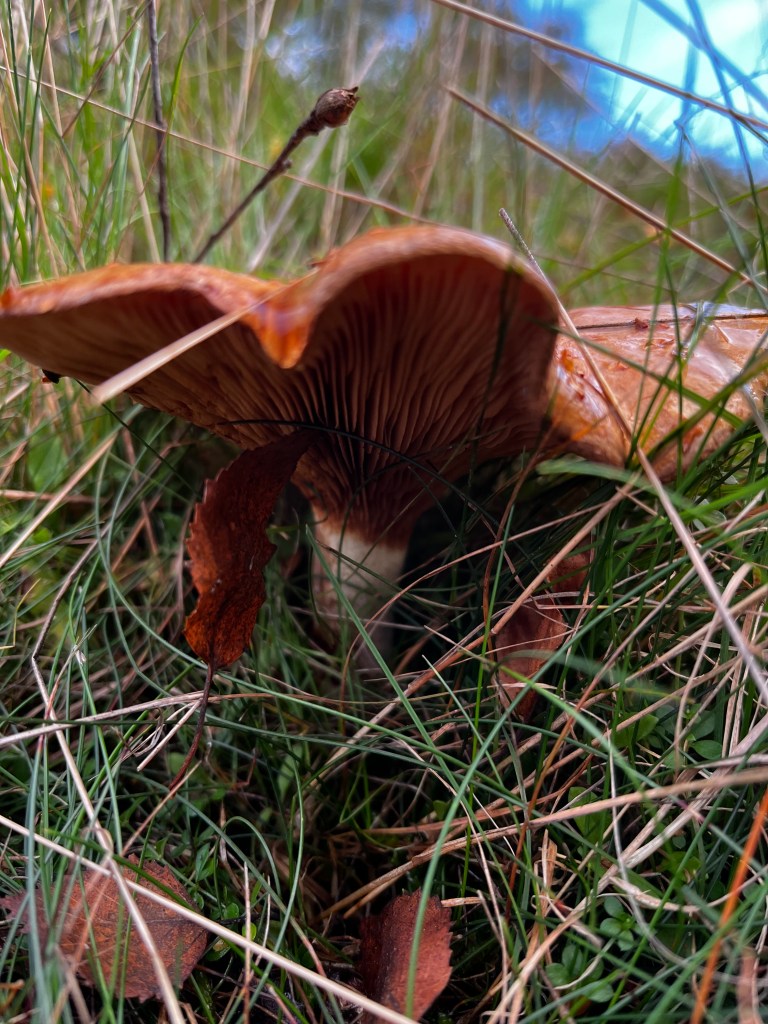

These inedible but pretty mushrooms above were found on Rammamere Heath, which is acid heathland and grass.
The Earthballs (Scleroderma) on far right look a bit like edible Puffballs when young. They are given away by their yellowy, cracked-leather look surface. Plus they are black inside and later explode with black spores!
Next it was off to Linslade Woods, otherwise known for its rich carpets of Bluebells in spring. As soon as i got into the wood the big rotten log to the right yielded its riches…including some edibles.
Shaggy Parasol
Below is Shaggy Parasol (Macrolepiota rhacodes). I’ve always eaten these and found them delicious and nutty fried on toast. Some literature says they can take up toxins if they are growing in nitrate rich areas. Use your judgement.
This one is a little short of the usual size of 12 to 20 cm high. That’s because it was bent under a piece of wood.
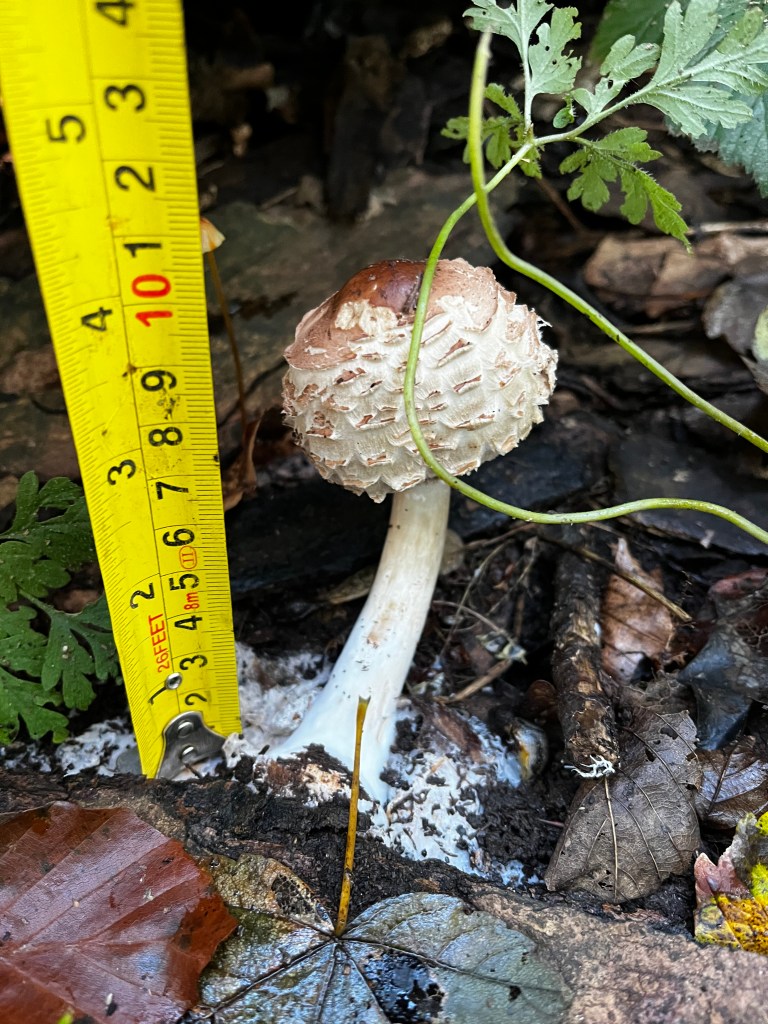
Beware smaller Parasols under 10cm high. (Lepiota sps). Some can cause death. The Brown Parasol (L.helveola) and the Lilac Brown Parasol (L.brunneolilacina) are the lethal ones.
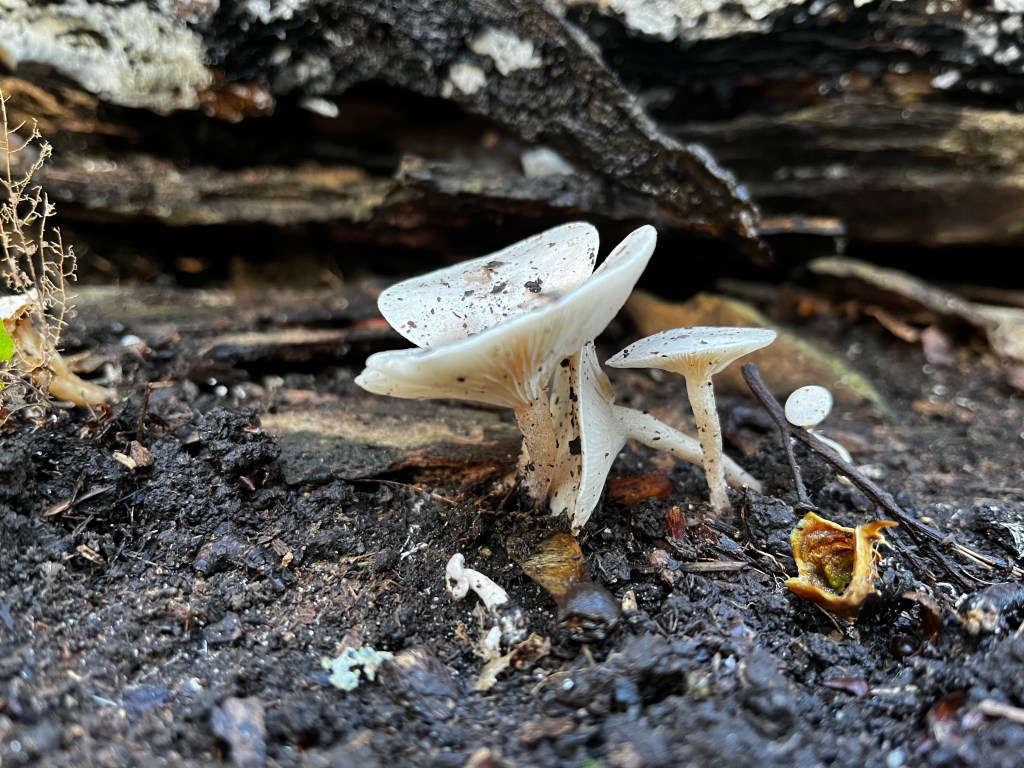
I also found some beautiful bracket fungi and an unidentified white mushroom. Bracket fungi are a good bet if you are in a survival situation. Many British species are tasty, and none of them, (even the ones that taste like acid cardboard), will kill you.
These ones were tough as Dot Cotton’s underwear. I left them well alone.

Freaked by a scary looking guy staring at me in a transit van, I hid behind a tree. He went into the back of his van eventually, presumably to prepare his duct tape, saws, drills and ropes. I took this opportunity to leg it back to my car.
It was on to Plantation Wood.
WOOD BLEWIT (Lepista nuda) & LESSER BLUE FOOT (L.sordida)
Wood Blewit is a gem among mushrooms. It’s so popular, it’s cultivated for eating too. I found the first young Wood Blewit in Linslade Wood. They’re a lovely two-tone metallic violet-grey.
The stem is fibrous, firm and wide at the base. The flesh is dry and smooth. The gills are free of the stem and fairly crowded.
This tiny specimen below could be the equally edible Lesser Blue-foot (Lepista sordida) as at 5cm it’s small for a Wood Blewit. It’s really important to measure the height and cap size of your finds.


I found some big, old Wood Blewits under Beech in Plantation wood. It’s very important to note under which trees or grasses you found your fungus. Species of fungi are symbiotic or parasitic on particular trees/grasses, and it can really help you avoid misidentification.

Older Wood Blewits lose some of their lilac colour, but you should still be able to see evidence of it on the stem.
The only real lookalike to Wood Blewit is the Purplish Cortinarius (Cortinarius purpurascens). This has a violet color and a thick stem. It’s edible, but not very tasty. It has rust brown spores, so you can either take a spore print or look for rusty colour under the gills or on the stem.
I double checked mine with a spore print overnight. Happily, my Wood Blewit produced some pale lilac spores.

AMETHYST DECIEVER & DECIEVER (Laccaria amethystina & L. laccata)
In the same piece of beech wood I found quite a few of this dainty little edible. They are purple and have the texture and look of Jelly Babies. Don’t be put off by the colour! They’re good to eat and can be dried for storage.
These mushrooms are very small, but there’s usally plenty around so hunt around if you find one.

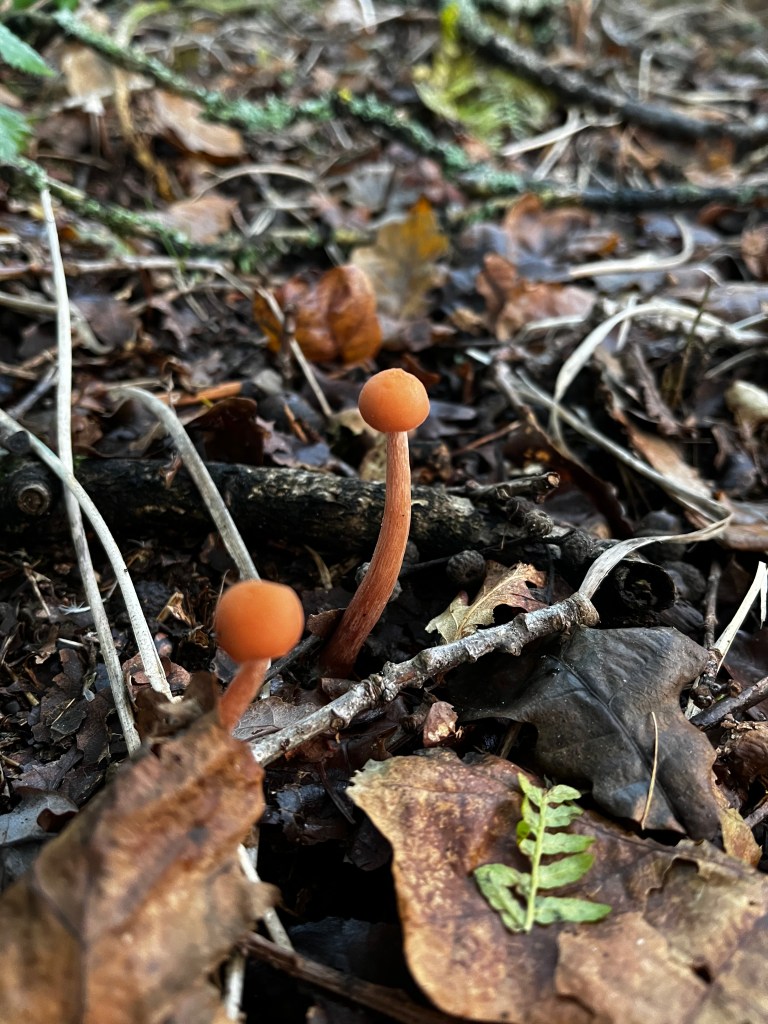
I found some Decievers under an oak tree. Both of these make a great omelette or risotto ingredient.
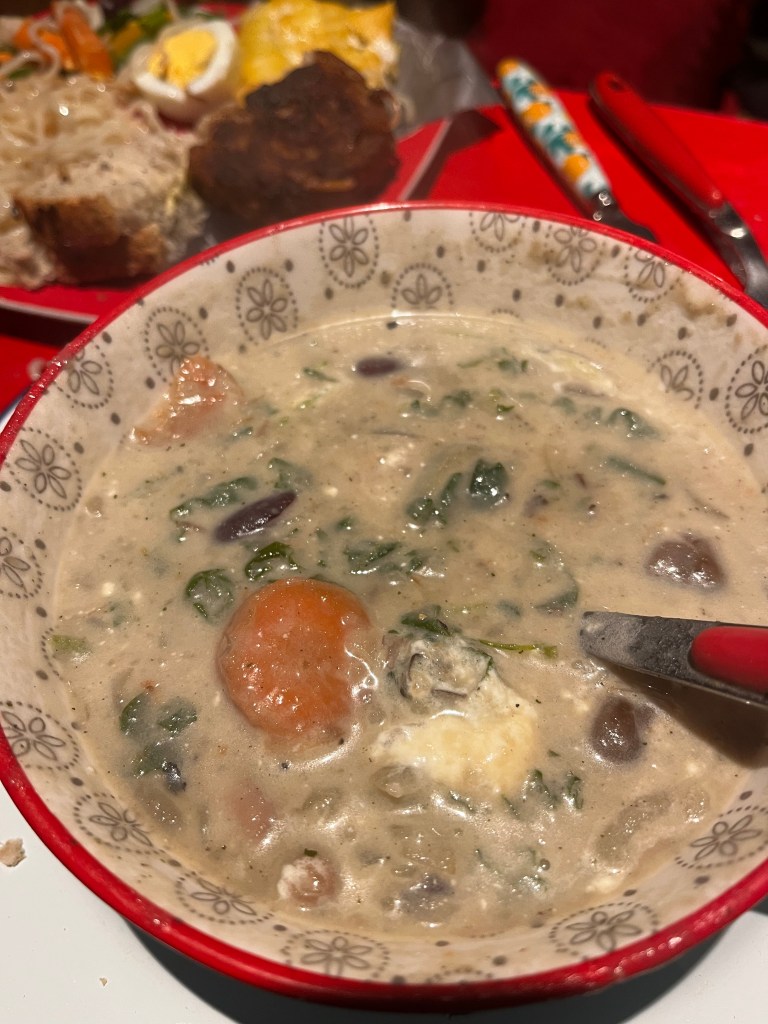
Below is a Nettle & Mushroom soup I made with potato, carrot and some sour cream. I used a lot of rehydrated Fairy Ring Champignons (Marasmius oreades) that I picked earlier. Just bung your dried mushrooms in some cold water or stock and wait a few hours before cooking.
It was very tasty! However, I could not convince my son of this. He ate a burger instead.
Remember, if your’e not 100% sure about a mushroom, don’t pick and eat it. I’ve been in training several years now. I’ll be teaching Fungi specific courses when I’m fully ready!
xx Hedgewitch Kat xx
 hedgewitchadventuresdotcom